The short answer
To start crocheting, buy a 5 mm (H-8) hook and one ball of smooth, light-colored medium-weight (#4) yarn, then learn four things: the slip knot, the chain, single crochet and how to turn your work. Most people can make a wonky but real dishcloth within a week, and the whole setup costs less than a takeout pizza.
Crochet at a glance
Cost to start
$ under $50
First result
A weekend
Per session
30-60 min
Learning curve
Gentle
| Cost to start | Realistically 10 to 20 USD for a hook and yarn |
|---|---|
| Ongoing cost | Low: yarn, a few dollars a ball for acrylic or cotton. It goes up fast if you fall for fancy fibers. |
| Time to first result | An afternoon to a chain and a few rows; 1 to 2 weeks to a finished dishcloth or coaster |
| Time per session | 20 to 60 minutes, and it happily fills ten spare minutes |
| Space needed | A drawer |
| Indoor or outdoor | Both |
| Solo or social | Either |
| Physical intensity | Low |
| Learning curve | Gentle: the basics take a weekend; reading patterns and shaping take a few months |
| Good if you like | working with your hands, TV or podcasts while you work, making gifts |
| Good for ages | Any age. Ergonomic hooks help with stiff or sore hands. |
| Noise and mess | Quiet and tidy: apartment-friendly, the only mess is yarn fluff |
| Best season | Year-round, with a big spike in autumn and winter (blankets, hats and gift season) |
This guide covers how to crochet from zero: what crochet is, whether it suits you, the few supplies you need, and a first-week plan that ends with a finished dishcloth. No talent required, and no big spend.
What crochet actually is (and why people love it)
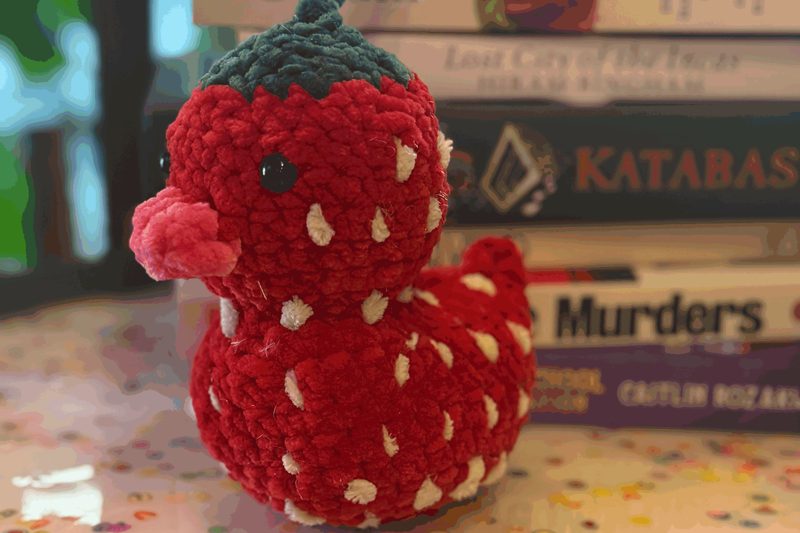
Crochet is making fabric out of yarn with a single hook. You pull one loop of yarn through another, over and over, and those loops stack into rows or spiral into rounds. Change how you pull the loops and you get different stitches, from tight little single crochets to tall, lacy doubles. Everything from a dishcloth to a granny-square cardigan to a tiny crocheted octopus is built from the same handful of moves.
A typical session looks like this: you, a sofa, a ball of yarn and a show you’ve seen before. Crochet is portable, quiet and very forgiving, because there’s only ever one live loop on your hook. Make a mistake and you just pull the yarn out to that point and go again. (Crocheters call this “frogging”, because you “rip it, rip it”.) It’s also one of the few crafts no machine can truly copy. Factories make crochet-look trims a different way, so the crocheted blankets and toys you see were almost certainly made by hand.
People stick with it because the progress is visible. You can see the thing grow in your hands, and you end up with something you can use or give away. Research on crocheters has linked the craft to feeling calmer and happier, and many people use it to wind down. One international survey of crocheters is Burns and Van Der Meer’s “Happy Hookers” study in Perspectives in Public Health, where most respondents said crochet made them feel calmer and happier. It’s a self-reported survey, so it shows how crocheters feel, not proof of cause.
Is crochet right for you?
You’ll probably love it if:
- You like having something to do with your hands while you watch TV, listen to podcasts or sit in waiting rooms.
- You enjoy small, steady progress more than big dramatic wins.
- You like the idea of making useful things (blankets, hats, bags) or cute ones (stuffed animals, called amigurumi).
- You want a hobby that costs almost nothing to try.
Maybe skip it (or try something else first) if:
- You hate repetition. Rows really are the same motion again and again. If you want more variety per minute, look at drawing.
- You want to make fine, drapey clothing like thin sweaters or socks. Crochet can do it, but knitting is better at it (see below).
- Counting to 20 without losing your place sounds like torture. A little counting is unavoidable.
Crochet or knitting?
Crochet is usually easier to get started with. You hold one tool instead of two, you only have one live loop to look after, and mistakes are much easier to undo. Knitting makes thinner, stretchier fabric, which is why most store-bought sweaters are knit. If you just want to make things fast and see whether you like yarn crafts, start with crochet. Our full comparison is here: crochet vs knitting. And if knitting is calling you, our knitting for beginners guide has the same first-week plan for two needles.
How much does crochet cost to start?
Try it
10 to 15 USD
One 5 mm (H-8) aluminum hook and one ball of smooth, light-colored #4 medium-weight acrylic or cotton yarn.
Proper starter
40 to 100 USD
An ergonomic hook set in the common sizes (3.5 to 6.5 mm), locking stitch markers, a blunt yarn needle, small scissors and three or four balls of yarn. Or one beginner kit that bundles all of it.
Upgrade later
50 to 150+ USD
Premium wooden or hand-turned hooks, natural fibers like merino or alpaca, a yarn swift and ball winder for hand-dyed skeins, blocking mats. All lovely, none needed for months.
Don't buy yet: the giant 100-piece hook and accessory kits (you'll use three things), and fuzzy, dark or novelty yarn. Fuzzy and dark yarn hide your stitches, so you can't see what you're doing.
Is crochet an expensive hobby?
No. Crochet is one of the cheapest hobbies to try, so spend almost nothing until you know you like it. One hook and one ball of yarn get you through your first week. A budget ergonomic hook set costs about 15 to 25 USD, while the Clover Amour set crocheters rave about is closer to 90 USD, which is why the starter tier has such a wide range. After that, yarn is the only real ongoing cost. Acrylic and cotton are a few dollars a ball. Merino, alpaca and hand-dyed yarn are where the money goes, and none of it is needed for months. For more low-cost ideas, see our list of cheap hobbies.
What crochet supplies do beginners actually need?
Just five things, and you need only the first two on day one:
- A 5 mm (H-8) hook. The classic beginner size for medium yarn.
- Smooth, light-colored #4 yarn. Acrylic or cotton. Cotton is perfect for dishcloths.
- A blunt yarn needle (also called a tapestry needle) for weaving in ends.
- Small scissors. Any sharp pair will do.
- Locking stitch markers. For marking the first and last stitch of a row. A paperclip works in a pinch.
If you’d rather get it all in one box, see our picks for the best crochet kits for beginners.
How to crochet: your first week, step by step
The goal for week one is simple: finish one small, flat thing. Not a blanket. A dishcloth. These are the basic steps to crochet, in the order you’ll learn them.
- Get set up (day 1): Grab your hook and yarn. Read the yarn label: it lists the recommended hook size. A #4 yarn with a 5 mm hook is the classic beginner pairing.
- Learn the slip knot and chain (days 1 to 2): These are the first two moves of almost every project. Chain 30, pull it out, chain 30 again. You’re practicing tension, which means keeping your loops the same size. Bella Coco’s YouTube channel has clear, slow beginner demonstrations, and her written how to crochet guide pairs with them.
- Learn single crochet and turning (days 2 to 4): Work a row of single crochet into your chain, chain 1, turn your work, and do it again. Count your stitches at the end of every row. If the number changes, you’ve skipped or added one at an edge, and that’s the number one beginner problem.
- Make your first project (days 4 to 7): A simple single-crochet dishcloth in cotton yarn. Chain 26, work about 25 rows of single crochet until it’s roughly square, then cut the yarn and weave in the ends with your yarn needle. If you’d like a written pattern to follow, Lion Brand has plenty of free beginner dishcloth patterns.
Your first project: a cotton dishcloth, about 7 inches square. It takes three to five hours spread over a few evenings, and you’ll have something you can actually use. It doesn’t matter if the edges wobble, because dishcloths are very forgiving.
Your first three months (and how not to quit)
- How to practice: 15 to 30 minutes most days beats a three-hour Sunday binge. Your hands learn tension through repetition, and short, frequent sessions build it faster.
- By the end of month 1: you can do chain, single crochet, half double crochet and double crochet, keep a straight edge most of the time, and finish a dishcloth, a simple scarf or a few granny squares.
- By month 3: you can follow a beginner pattern on your own, work in the round (for hats and amigurumi), change colors, and join squares into something bigger, like a cushion cover or a baby blanket.
- The wall most people hit: going from rows to rounds, and reading a written pattern for the first time. Both feel like a foreign language for a week, then click. Our guide on how to read a crochet pattern walks through a real example line by line, and the crochet abbreviations chart decodes the shorthand. Sore hands are the other wall: if your hand aches, you’re probably gripping too hard, so loosen up and take breaks.
Common beginner crochet mistakes
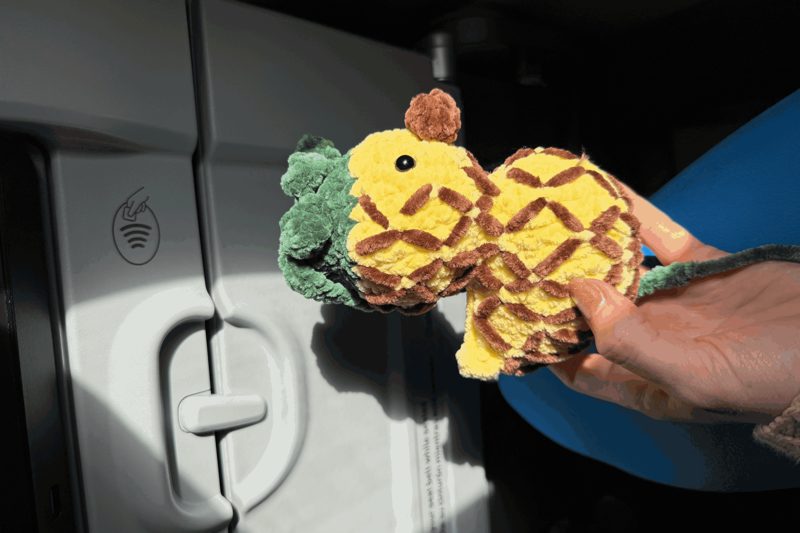
- Choosing hard-to-see yarn. Black, fuzzy or chenille yarn makes it almost impossible to find your stitches. Start with a smooth, light, solid color.
- Losing stitches at the edges. If your rectangle is turning into a triangle, you’re missing the first or last stitch of each row. Put a stitch marker in the first and last stitch and count every row.
- Death-grip tension. Tight stitches are hard to get the hook into, and they hurt your hands. Relax your grip, and let the yarn slide through your fingers instead of yanking it.
- Starting with a blanket. Blankets take months. Start small, finish things, and build up.
- Mixing up US and UK terms. A UK “double crochet” is a US “single crochet”. Check which terms a pattern uses before you start (the pattern guide explains how to tell).
Crochet rules of thumb and words you’ll hear
- The turning chain rule: at the start of a row, chain enough to reach the height of your stitch. That’s 1 for single crochet, 2 for half double and 3 for double. Patterns say whether that chain counts as a stitch.
- Under both loops: unless a pattern says otherwise, put your hook under both loops at the top of a stitch. “BLO” and “FLO” (back loop only, front loop only) are the exceptions, used for ribbing and texture.
- Frogging: pulling out stitches to fix a mistake. Everyone does it, constantly.
- Amigurumi and the magic ring: amigurumi is crocheting small stuffed toys. The magic ring (or magic circle) is the adjustable loop most amigurumi patterns start from.
- WIP and stash: a work in progress, and the yarn you own but haven’t used yet. Both tend to grow.
The best free resources for learning crochet
- Videos: Bella Coco (Sarah-Jayne Fragola) is a go-to for absolute beginners, with slow, friendly tutorials, many in both left- and right-handed versions. Hooked by Robin is great for clear stitch close-ups. When a stitch won’t click, search the stitch name plus “slow motion”.
- Community: r/crochet. Read its beginner wiki before posting. r/CrochetHelp is good for “what went wrong here?” photos.
- Free patterns: Lion Brand has thousands of free patterns you can filter by skill level. Ravelry is the giant pattern database: filter by craft = crochet, difficulty = 1, and price = free.
- App or tool: any free row-counter app, or Ravelry’s own project tracker. A cheap stitch marker does the same job.
- In person: many local yarn shops run beginner classes and casual “stitch nights”, libraries often host free crafting groups, and some big craft stores run classes too. One hour with someone watching your hands can fix what three videos couldn’t.
- When you want structure: online course sites like Domestika and Craftsy have paid classes on granny squares, amigurumi and garments. For a book, The Crochet Stitch Bible by Betty Barnden is a visual dictionary of hundreds of stitches.
Shopping for a crocheter rather than learning yourself? See our gifts for crocheters. Looking for something different? Browse more creative hobbies.
Where to go next
Ready to go deeper?
We get you started. These are the specialist sites and communities we'd send a friend to next.
- Lion Brand Yarn ↗free patterns at every level, plus stitch tutorials when you want to branch out
- Ravelry ↗the biggest pattern library and project database there is. See what other people made with a pattern before you start it
- r/crochet ↗inspiration, troubleshooting and a lot of very good amigurumi
- Craft Yarn Council ↗the official US yarn weight and hook size standards, useful when you start swapping yarns
If you like crochet, try...


More on crochet
Crochet FAQ
What is the first thing you should crochet as a beginner?
A dishcloth or a square coaster in single crochet. It's flat, small, uses one stitch and forgives wonky edges. After that, a simple scarf or a granny square is the classic next step.
Is crochet hard to learn?
Not really. Most people learn the basic stitches in a weekend. The tricky part is keeping your tension even and your stitch counts right, and that comes with a few weeks of practice, not talent.
Is crocheting an expensive hobby?
No. A hook and a ball of yarn cost about 10 to 15 dollars, and a comfortable starter setup runs about 40 to 100 dollars. After that your main cost is yarn, and how much you spend there is up to you.
Can you teach yourself crochet?
Yes. Most crocheters today learned from YouTube and free patterns. If you get stuck, post a photo to r/CrochetHelp or visit a local yarn shop's stitch night.
Is crocheting easier than knitting?
For most beginners, yes. You only manage one hook and one live loop, and undoing mistakes is simpler. Knitting isn't hard, but it takes a little longer to feel comfortable.
Is it too late to start crochet at 40, 60 or 80?
Not at all. Crochet is low-impact and seated, and many people start in retirement. If your hands are stiff or arthritic, use an ergonomic hook with a thick, soft handle, go up a hook size and take regular breaks.
Can you make money from crochet?
A little, mostly from selling patterns or small items at craft fairs and online. Big pieces like blankets are slow to make, so treat it as a hobby that might pay for its own yarn, not a side income.