Gear guide · Golf
The Best Golf Clubs for Beginners (2026): What to Buy, and What Matters More

The short answer
Don't spend much on clubs at first. A complete beginner set like the Callaway Strata, or a used set of forgiving game-improvement irons, is all you need. Put the money you save into lessons, and spend your practice time on putting and chipping. Those three things will lower your scores far faster than any new club. When you're ready to upgrade, look at modern game-improvement irons like the TaylorMade Qi Max, and buy wedges and fairway woods used.
Our picks at a glance
| Pick | Label | Best for | Roughly | Buy |
|---|---|---|---|---|
| Callaway Strata complete set | Community favorite | Best complete beginner set | 300–500 USD | Check price ↗ |
| Used game-improvement irons from Play It Again Sports | Used it | Best value | 150–400 USD for a used iron set | Check price ↗ |
| TaylorMade Qi Max irons | Researched pick | Best new irons for beginners | 950–1,200 USD for 7 irons | Check price ↗ |
| Callaway Apex Ai200 irons | Researched pick | Best irons to grow into | 1,000–1,400 USD for 7 irons | Check price ↗ |
| Callaway Quantum Max fairway wood | Researched pick | Best fairway wood | 300–400 USD new, much less for older models used | Check price ↗ |
| Odyssey mallet putter (DFX #7 or White Hot OG) | Community favorite | Best putter | 150–250 USD | Check price ↗ |
1.Callaway Strata complete set
Best for: Best complete beginner set
Why: A driver, fairway wood, hybrid, irons, putter and a stand bag in one box, all built to be forgiving. The set most beginner guides and golf shops point new players to.
The catch: You'll outgrow the irons once your swing settles, and some versions skip a sand wedge, so check the set list.
 ✓ Used it · how we buy most of our clubs
2.Used game-improvement irons from Play It Again Sports
Best for: Best value
Why: Last decade's forgiving irons cost a fraction of new ones and play almost as well. You can hold them, swing them and trade them in later.
The catch: Stock changes by store and week, so check shaft flex and grips, and budget for new grips if they're slick.
 Researched pick
3.TaylorMade Qi Max irons
Best for: Best new irons for beginners
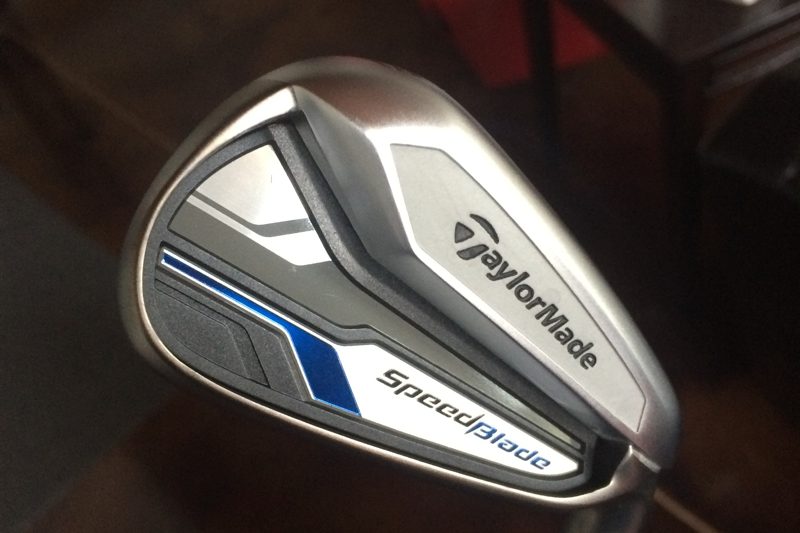
Why: Big, forgiving heads, wide soles and a high launch, the modern version of the TaylorMade SpeedBlade game-improvement irons we started with.
The catch: A lot to spend before you know you'll stick with golf. A used set of older game-improvement irons does the same job for less.
 Researched pick
4.Callaway Apex Ai200 irons
Best for: Best irons to grow into
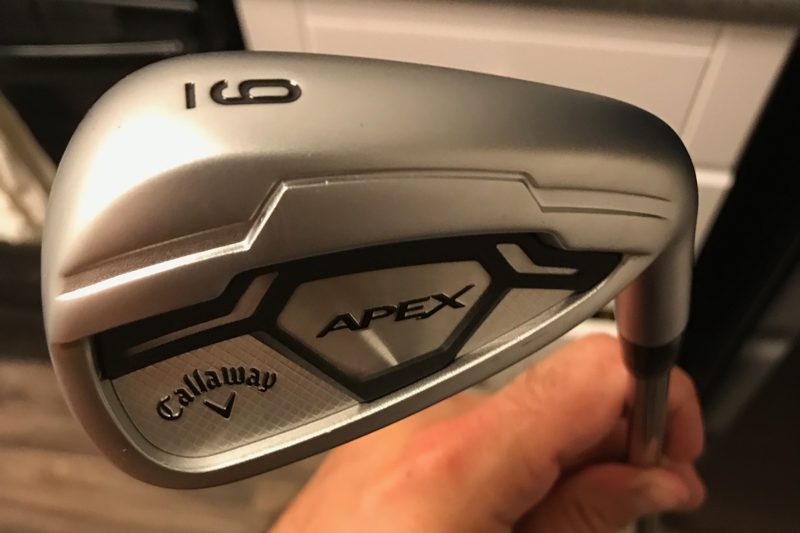
Why: Players-distance irons that still have plenty of forgiveness. We play an older set of Callaway Apex irons as roughly a 15 handicap, and this is their current version.
The catch: Not a first set. Buy them once you hit the ball solidly most of the time.
 Researched pick
5.Callaway Quantum Max fairway wood
Best for: Best fairway wood
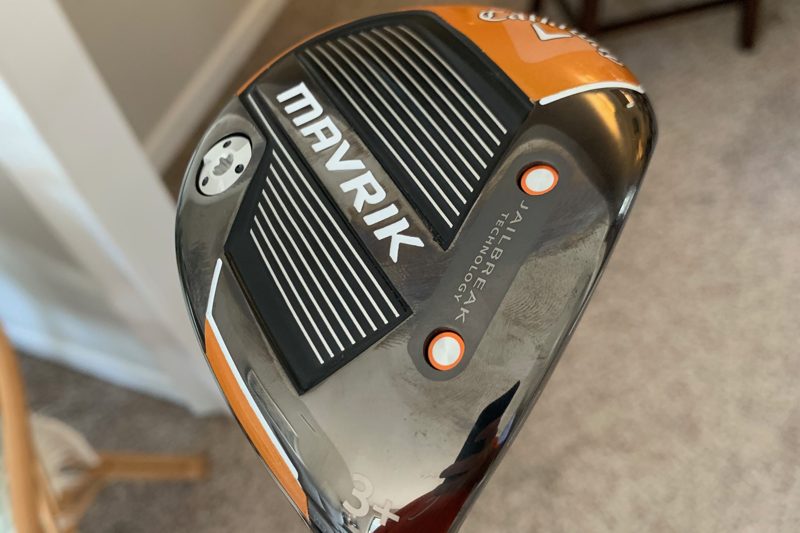
Why: Callaway's 2026 forgiving fairway wood, the successor to the Mavrik 3+ we carry today. Easy to launch off the deck and off the tee.
The catch: Fairway woods are the hardest clubs for beginners to hit. A hybrid is often the better first long club.
6.Odyssey mallet putter (DFX #7 or White Hot OG)
Best for: Best putter
Why: A stable mallet head with alignment lines and Odyssey's soft insert, the most common recommendation for new golfers. Putting is where beginners lose the most strokes.
The catch: Putter feel is personal. Try several in a shop and pick the one you aim best.
The best golf clubs for beginners are cheaper than you think, because clubs aren’t what holds a new golfer back. We started on a set of TaylorMade SpeedBlade game-improvement irons, play older Callaway Apex irons today as roughly a 15 handicap, and have bought a lot of our bag used. This guide covers what to buy, but it starts with what matters more: lessons, putting and chipping.

New to the game? Start with our golf guide for beginners.
How we chose
Picks marked “Used it” are clubs and shops we’ve used ourselves. Where we recommend a current club, it’s often the modern version of something we’ve played: our first irons were TaylorMade SpeedBlades, our current irons are Callaway Apex, and our 3-wood is a Callaway Mavrik 3+. The rest come from golf shop advice, long-running r/golf threads and established equipment reviewers. How we choose.
Before you buy clubs: what actually matters
If you take one thing from this page, take this: the order of importance for a beginner is lessons, then putting, then chipping. Clubs come a distant fourth.
1. Take lessons, early
A few lessons from a PGA professional are the best money you’ll spend in golf. A coach fixes your grip, setup and posture before bad habits set in, and those basics are much harder to unlearn after a season of practicing them wrong. Many courses and ranges offer beginner group clinics for less than a private lesson, and a package of three to five lessons over your first couple of months is plenty to start. Tell the coach your goal (break 100, play with friends, just enjoy it) so the lessons fit.
2. Practice putting more than anything else
Roughly 40 percent of a typical round’s strokes are putts, and three-putts are where beginners quietly lose the most shots. Putting is also the easiest skill to practice: most courses have a free practice green, and you can work on it on a carpet at home. Spend at least half of your practice time on putting. Focus on distance control from long range (getting the ball within a few feet) and making everything inside three feet.
3. Then chipping
Most beginner holes are lost around the green: chunked chips, bladed chips and three shots to get on. A simple, repeatable chip, like a putting stroke with a lofted club, will save more strokes than an extra 20 yards off the tee. Practice from different lies, and learn one go-to shot before trying fancy ones.
4. Then the full swing, and then clubs
Driving range sessions are fun, but they’re the least efficient practice for a beginner. Chipping and putting are how you score better. It can be hard to believe when a big drive feels so good, but until you’re shooting in the 90s, your driver isn’t what’s costing you the most strokes, even if it’s the most fun club in the bag. And no club can fix a swing. Forgiving clubs help, which is why the picks below are built to be forgiving, but they help most once lessons have given you a swing to work with.
Tips we wish we’d known sooner
Get fitted earlier than you think
Most beginners assume club fitting is for good players. We’d get fitted much sooner than that. It’s fine if your swing changes after the fitting. What matters more is that your swing develops around clubs that are the right length, lie and weight for your body, rather than learning to compensate for clubs that don’t fit. Many golf shops and fitters will do a basic fitting, and some credit the fee toward clubs.
Learn how far each club goes, and keep updating it
Knowing your distances is what turns a good swing into a good score. Hit each club at the range or on the course, note how far it carries, and keep revising those numbers as your swing improves. A handy rule of thumb to start with: in a well-set-up bag, each club is roughly 7 to 10 yards apart. So if your 8-iron goes 130 yards, your 7-iron should go about 137 to 140 and your 9-iron about 120 to 123. Treat it as a starting point, and trust your own numbers once you have them.
Once you make solid contact, play the same ball
You don’t need to spend a lot on golf balls, especially while you’re losing a few a round. But once you’re making contact on almost every swing, playing the same ball every time is a real advantage, even if it’s a cheap one. Distance control is one of the most important skills in golf, and different balls fly remarkably different distances: some are a full club apart. Switching balls from hole to hole means your yardages are never quite right.
Which golf clubs should a beginner get?
Callaway Strata: the best complete beginner set
A complete set takes the guesswork out of starting. The Strata includes a driver, a fairway wood, a hybrid, a handful of irons, a putter and a stand bag, all designed for slower swings and off-center hits. It’s the set most golf shops and beginner guides recommend.
Who it’s for: brand-new golfers who want everything in one box.
Worth knowing: check which version you’re buying, since piece counts vary and some skip a sand wedge. Most golfers replace the irons within a few seasons.
Used clubs from Play It Again Sports: the best value
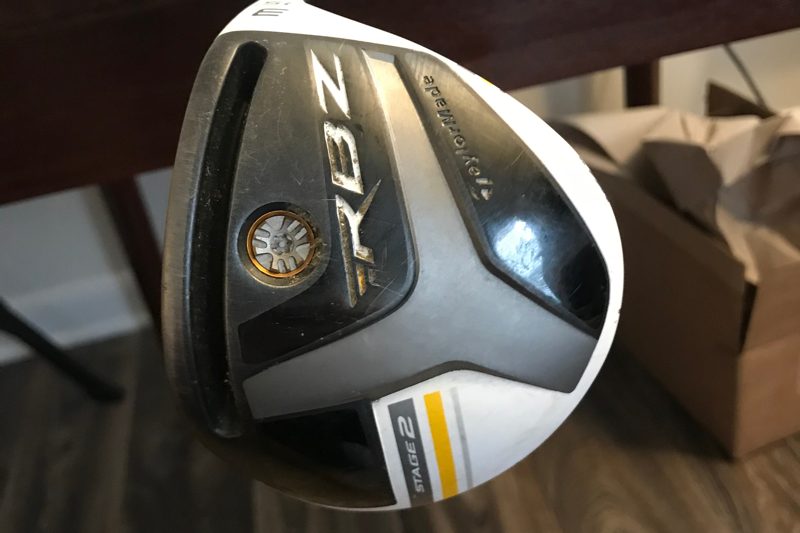
We really like shopping for used clubs at Play It Again Sports. It’s where we bought this TaylorMade RBZ Stage 2 fairway wood and many of our wedges. Golf clubs lose value fast and change slowly, so a set of game-improvement irons from a few years ago plays almost exactly like this year’s and costs a fraction of the price. Buying in a store means you can hold the clubs, check the grips and often take a swing, and you can trade them back in when you upgrade.
Who it’s for: anyone who wants better clubs than a boxed set without paying new prices.
Worth knowing: match the shaft flex to your swing (most beginners want regular or senior flex, not stiff), and budget for new grips if the old ones are shiny or hard. Wedges are the best used buy of all.
TaylorMade Qi Max: the best new irons for beginners
Our first real irons were TaylorMade SpeedBlades, a forgiving game-improvement set. Their modern equivalent is the 2026 TaylorMade Qi Max (and the even more forgiving Qi Max HL). They have larger heads, wider soles and thicker toplines, which make them easy to launch and confidence-inspiring to look down at.
Who it’s for: beginners who’ve had a few lessons, know they’re sticking with golf and want a new set to keep for years.
Worth knowing: new irons are expensive. Older game-improvement models (SpeedBlade, M-series, Stealth, Qi) are excellent used buys.
Callaway Apex Ai200: the irons to grow into
We play an older set of Callaway Apex irons, roughly as a 15 handicap. The current Apex Ai200 is the same idea: a players-distance iron with a slimmer look than a game-improvement iron but plenty of forgiveness and distance.
Who it’s for: improving golfers who strike the ball solidly most of the time and want a second set.
Worth knowing: not a first set. If you’re still regularly hitting it thin or fat, stay with game-improvement irons.
Callaway Quantum Max: the best fairway wood
The 3-wood in our bag today is a Callaway Mavrik 3+. Its current successor is Callaway’s 2026 Quantum Max fairway wood, built to launch easily off the ground and from the tee.
Who it’s for: golfers who want a long club they can also hit off the fairway.
Worth knowing: fairway woods are hard for beginners. Many new golfers do better with a hybrid first. Previous models, like the Mavrik, Paradym and Elyte, are much cheaper used.
Odyssey mallet putter: the best putter for beginners
Since putting matters so much, the putter is the one club worth choosing carefully. A mallet putter, with a bigger head and alignment lines, is more stable on off-center strokes and easier to aim. Odyssey’s DFX #7 and White Hot OG mallets are common beginner recommendations.
Who it’s for: every beginner. Even with a complete set, it’s worth trying putters in a shop.
Worth knowing: feel is personal. Roll a few putts with several models and pick the one you aim most consistently.
How many clubs does a beginner need?
You’re allowed 14, but you don’t need them. For your first season, a driver or hybrid, a 7-iron, a 9-iron, a pitching wedge, a sand wedge and a putter will get you around any course. Fewer clubs means fewer decisions while you learn.
Skip these as a beginner
- Blades and “players” irons. They’re unforgiving, and mishits hurt.
- Stiff or extra-stiff shafts unless a fitter says so.
- A new driver before lessons. It won’t fix a slice.
- Expensive balls, at first. You’ll lose a lot. Cheap or recycled balls are fine until you’re making solid contact, then pick one ball and stick with it.
- A rangefinder, for now. A free GPS app like 18Birdies shows distances to the front, middle and back of every green, and it’s what we still use at a 15 handicap.
When you’re ready to settle on one ball, it doesn’t have to be expensive. We play the Callaway Chrome Soft Triple Track: it feels soft around the greens, and its three printed lines make it easy to aim putts.
Ready to play?
Our golf starter guide covers your first trips to the range and the course. Shopping for someone else? See our gifts for beginner golfers.
Questions people ask
What golf clubs should a beginner buy?
A complete beginner set or a used set of forgiving game-improvement irons, plus a putter you like. Spend more on lessons than on clubs at first.
What is the most important thing for a beginner golfer?
Lessons, then putting, then chipping. A few lessons fix the grip and setup problems that are hard to unlearn, and putting and chipping are where most beginner strokes are lost.
When should a beginner get fitted for golf clubs?
Earlier than most people think. Your swing will keep changing, and that's fine. It's better for it to develop around clubs that are the right length and weight for you than to learn to work around clubs that don't fit.
How far apart should each golf club go?
As a rule of thumb, roughly 7 to 10 yards per club in a well-set-up bag, so a 7-iron goes 7 to 10 yards farther than an 8-iron. Use that as a starting point, then learn your own numbers and keep updating them.
Does the golf ball matter for beginners?
Not at first, so buy cheap balls while you're losing a lot. Once you make solid contact most of the time, play the same ball every round, even a cheap one. Different balls can fly a full club apart, and distance control is one of the most important skills in golf.
Should beginners buy used golf clubs?
Yes. Used clubs from a store like Play It Again Sports cost a fraction of new ones and can be traded in later. It's how we've bought many of our own clubs, including a fairway wood and most of our wedges.
How many clubs does a beginner need?
Far fewer than the 14 allowed. A driver or hybrid, a few irons (7, 9 and pitching wedge), a sand wedge and a putter are plenty for your first season.
What are game-improvement irons?
Irons with bigger heads, wider soles and weight pushed low and to the edges, so off-center shots still fly reasonably straight and high. Almost every beginner should play them.
How much should a beginner spend on golf clubs?
Roughly 300 to 500 USD for a complete set, or less for a good used set. Save the rest for lessons and range balls.
New to golf? Start with our golf beginner's guide.