Gear guide · Photography
The Best Beginner Cameras (2026): Picks From Our Own Bag
The short answer
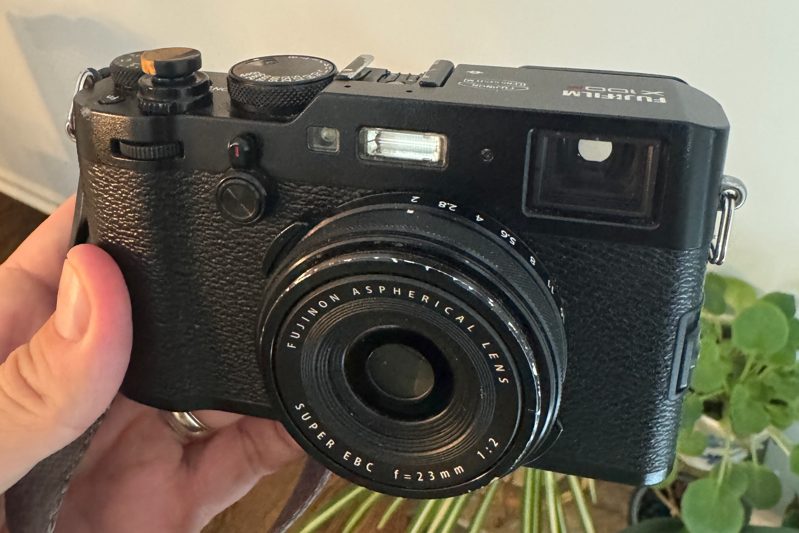
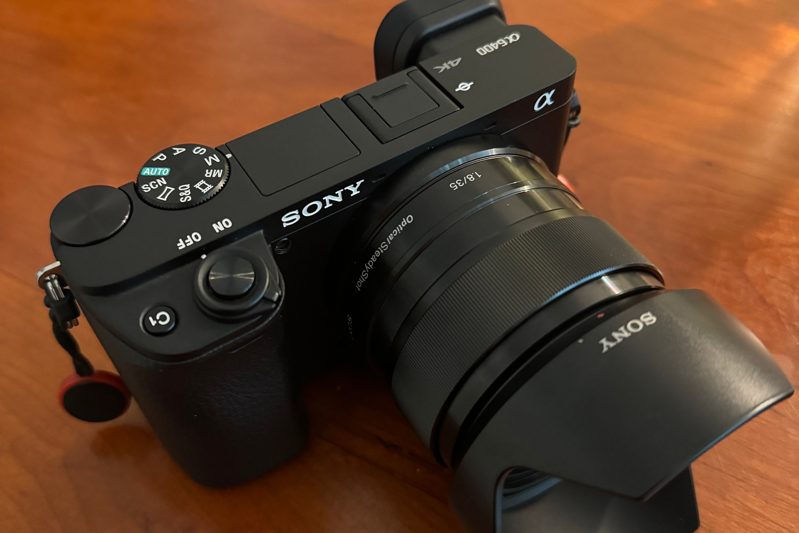
For most people, the best beginner camera is a small APS-C mirrorless camera with a kit lens. We started on the Sony a6400 and still recommend it: fast, reliable autofocus, a real viewfinder and a huge range of lenses, including cheap vintage ones. If you want the friendliest menus, get the Canon EOS R50. If you'd rather carry one beautiful camera everywhere, a used Fujifilm X100F is a luxury starter we loved. And if film calls to you, start with a Canon AE-1 Program.
Our picks at a glance
| Pick | Label | Best for | Roughly | Buy |
|---|---|---|---|---|
| Sony a6400 | Used it | Best first camera to grow with | 800–1,100 USD with a kit lens, less used | Check price ↗ |
| Canon EOS R50 | Community favorite | Easiest first camera | 680–950 USD with lenses | Check price ↗ |
| Fujifilm X100F (used) | Used it | Best luxury starter camera | 1,000–1,400 USD used | Check price ↗ |
| Sony ZV-E10 II | Researched pick | Best for video and vlogging | 1,000–1,200 USD | Check price ↗ |
| Canon EOS R100 | Researched pick | Best on a tight budget | 450–750 USD depending on the kit | Check price ↗ |
| Canon AE-1 Program (used) | Used it | Best starter film camera | 150–400 USD used with a 50mm lens | Check price ↗ |
| Sony a7 IV | Used it | Best camera to grow into | 1,800–2,500 USD body only, less used | Check price ↗ |
 ✓ Used it · our first camera
1.Sony a6400
Best for: Best first camera to grow with
Why: Quick, sticky eye-tracking autofocus, a real viewfinder, a flip-up screen and Sony's E mount, which takes everything from kit zooms to 50-year-old film lenses.
The catch: No in-body stabilization, a small battery and dense menus. Buy a spare battery on day one.
2.Canon EOS R50
Best for: Easiest first camera
Why: Tiny, quick subject-detection autofocus, a real viewfinder, a flip-out touchscreen and the friendliest menus here.
The catch: The grip is small for big hands, and there's no in-body stabilization.
3.Fujifilm X100F (used)
Best for: Best luxury starter camera
Why: A fixed 35mm-equivalent f/2 lens, a gorgeous hybrid viewfinder, real dials for every setting and Fujifilm's film-look color straight out of the camera.
The catch: The lens doesn't zoom or swap, and the X100 trend has pushed used prices up. The new X100VI costs more and is often sold out.
4.Sony ZV-E10 II
Best for: Best for video and vlogging
Why: 4K60 video, a flip-out screen, a vertical-video mode for social clips and a much bigger battery than the original.
The catch: No viewfinder, so it's less pleasant for stills in bright sun, and it's a lot to spend on a first camera.
5.Canon EOS R100
Best for: Best on a tight budget
Why: Canon's cheapest mirrorless camera, with a viewfinder and Dual Pixel autofocus, often sold with two zoom lenses.
The catch: A fixed screen with no touch, simpler autofocus tracking and cropped 4K video.
 ✓ Used it · our film pick
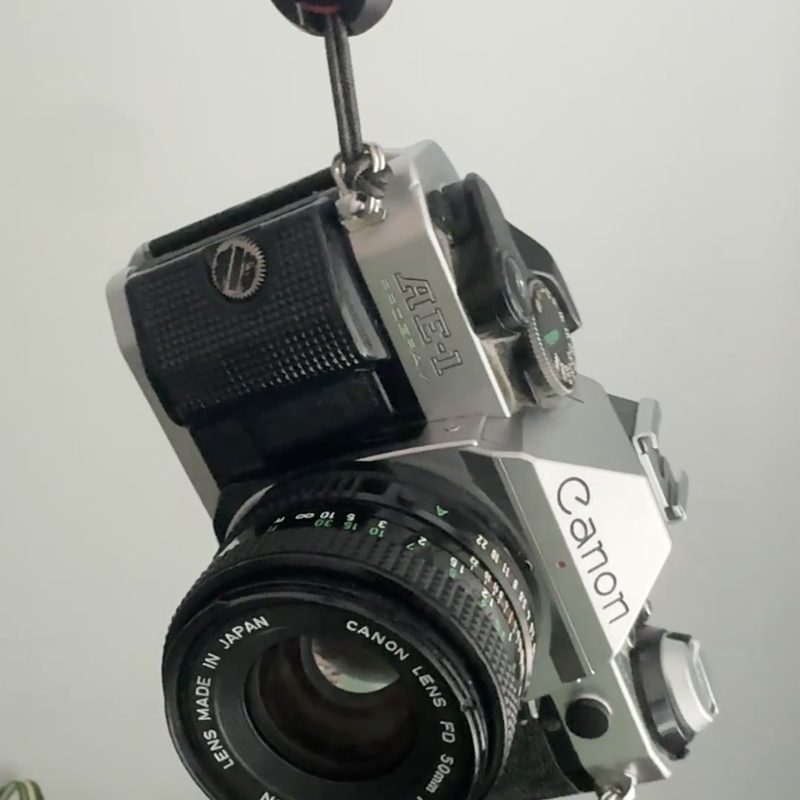
6.Canon AE-1 Program (used)
Best for: Best starter film camera
Why: A classic, reliable 35mm SLR with a program auto mode for easy first rolls and full manual when you're ready. They're everywhere secondhand, and so are cheap Canon FD lenses.
The catch: It's 40-plus years old, so buy from a seller who tests it, and every roll costs money to buy and develop.
7.Sony a7 IV
Best for: Best camera to grow into
Why: Full frame, in-body stabilization, excellent autofocus and a flip-out screen. It's the camera we upgraded to, and adapted vintage lenses keep the lens bill low.
The catch: Too much camera for most beginners, and new full-frame lenses are big and expensive.
The best beginner camera is one that’s small enough to bring, smart enough to focus for you, and simple enough that you’ll learn the settings one at a time. This guide mixes cameras we’ve owned and shot with ourselves, from our very first mirrorless camera to the one we use now, with the models beginner forums and reviewers recommend most. Each pick says who it’s for and gives an honest catch. It also covers when your phone is enough, and the cheapest lens trick we know.
New to the hobby? Start with our photography guide for beginners. It covers what photography really costs, your first week and the settings worth learning first.
How we chose
Picks marked “Used it” are cameras someone on our team has owned and shot with for real: the Sony a6400 that started it all, a used Fujifilm X100F, a Canon AE-1 Program for film, and the Sony a7 IV we use now. We also owned a Sony a7CR for a while. The other picks we haven’t owned, so we chose them from the manufacturers’ spec sheets, long-term owner reports, the recurring advice in r/AskPhotography and r/photography, and reviews from established camera reviewers. Either way, we filtered for what matters most to someone moving up from a phone:
- Autofocus you don’t have to think about. Modern subject detection (faces, eyes, animals) is the biggest leap over older cameras.
- A good kit lens and a lens system to grow into. You buy into a lens mount, not just a camera.
- Easy menus and a guided or assist mode, so you can learn settings one at a time.
- Small enough to carry. The best camera is the one you bring.
- Price, weighed against all of the above.
Each pick’s label says how it was chosen. How we choose.
Do you need a camera at all?
Modern phones are very good, especially in good light. They’re always with you, and their software does a lot of clever work behind the scenes. A dedicated camera earns its place when you want:
- Background blur that looks natural, for portraits and close-ups.
- Fast-moving subjects, like kids’ sports, pets and wildlife, where phone autofocus and shutter lag struggle.
- Real zoom without the image falling apart.
- Low-light shots without the smeary, over-processed look.
- Control, if you want to learn how exposure actually works.
Starting on a phone is completely valid, and expensive gear, tempting as it is, is totally unnecessary for learning. If none of that matters to you yet, learn the basics on your phone first: composition, light and timing all transfer. Then buy a camera when you hit the phone’s limits.
DSLR or mirrorless for beginners?
Every digital camera here is mirrorless, and that’s deliberate. Canon, Nikon and Sony now put their new lenses and bodies into mirrorless systems, and new beginner DSLRs have mostly disappeared from shelves. Mirrorless cameras are smaller, they show you the exact exposure in the viewfinder before you shoot, and their subject-detection autofocus is far better than older DSLRs at this price.
A used DSLR can still be a cheap way to learn, and plenty of people take great photos with them. Just know you’re buying into a system that’s winding down, so lens choices and resale value will shrink over time.
Which beginner camera should you get?
Sony a6400: the best first camera to grow with
The a6400 was our first real camera, and it’s still the one we’d hand a beginner who wants room to grow. It has a 24MP APS-C sensor, Sony’s real-time tracking autofocus that locks onto eyes and simply stays there, an electronic viewfinder, 4K video and a screen that flips up to face you. It’s small enough to carry every day.
The real reason to choose it is the lens mount. Sony’s E mount has more lenses than any other mirrorless system, from cheap kit zooms to third-party primes from Sigma, Tamron and Viltrox, and it takes almost any vintage film lens with a simple adapter (more on that below). Ours wore the Sony E 35mm f/1.8 OSS most of the time, a small, stabilized prime that frames about like a 50mm on full frame and makes everyday photos look much less like phone shots.
Who it’s for: beginners who want photos first, video second, and a system they won’t outgrow.
Worth knowing: there’s no in-body stabilization, so use stabilized lenses (the 35mm f/1.8 OSS is one) for low light. The battery is small, so buy a spare. Sony’s menus are famously dense, but you’ll only touch a handful of settings. The a6400 has been out for years, so check the used market: good copies go for a lot less than new.
Canon EOS R50: the easiest first camera
The R50 is the camera beginner forums recommend most often, and it’s easy to see why. It has a 24.2MP APS-C sensor, Canon’s Dual Pixel CMOS AF II with subject detection, a real electronic viewfinder, a fully articulating touchscreen and 4K 30p video. It’s very small and light, and its guided menus explain each setting as you change it. Canon also sells a video-focused version, the R50 V, which drops the viewfinder.
Who it’s for: anyone moving up from a phone who wants better photos of kids, pets, travel and everyday life, and wants the camera to explain itself.
Worth knowing: it’s tiny, so people with big hands may find the grip cramped. There’s no in-body stabilization. Canon’s RF mount has fewer affordable third-party lenses than Sony’s E mount, though Canon’s own small primes are good value.
Fujifilm X100F: the luxury starter camera
We bought our X100F used, and we loved it. It’s a fixed-lens camera: a 24MP APS-C sensor behind a sharp 23mm f/2 lens (about 35mm on full frame), so there’s nothing to swap and nothing to decide. What makes it special is how it feels to use. Shutter speed, aperture and exposure compensation all have physical dials, so you learn exposure by turning real controls. The hybrid viewfinder switches between an optical window and an electronic view. And Fujifilm’s Film Simulations give you lovely color without ever opening editing software.
Who it’s for: beginners who want one beautiful camera to carry everywhere, care how a camera looks and feels, and mostly shoot street, travel, family and everyday life.
Worth knowing: the lens doesn’t zoom, so it’s a bad fit for sports, wildlife or anything far away. It isn’t weather sealed, and batteries go quickly. The X100 series became a social media darling, which pushed used prices well past what an older camera usually sells for. The current X100VI is better in every way, but it costs more and is often sold out. A used X100F or X100V is the smarter buy.
Sony ZV-E10 II: best camera for video and vlogging
Sony built this one for creators. It has a 26MP APS-C sensor, 4K60 video, a flip-out screen, a vertical-video interface for social clips and a much bigger battery than the original ZV-E10. It uses the same E mount as the a6400, so the same lenses (and vintage adapters) work.
Who it’s for: anyone whose main goal is YouTube, TikTok, family videos or filming a hobby. If you want to film yourself playing guitar, cooking or painting, this is the one.
Worth knowing: there’s no viewfinder, so in bright sun you’re squinting at the screen, and it’s less pleasant as a stills camera than the a6400 or R50. For video, budget for a small microphone and a tripod too.
Canon EOS R100: best beginner camera on a budget
The R100 is Canon’s cheapest mirrorless camera. It has a 24.1MP APS-C sensor, a viewfinder and Canon’s Dual Pixel autofocus, and it’s often bundled with two zoom lenses for about what the R50 costs with one. For photos in good light, a beginner will struggle to tell the difference.
Who it’s for: beginners on a firm budget who mainly shoot photos, and parents buying a first real camera for a teenager.
Worth knowing: the screen is fixed and isn’t a touchscreen, autofocus tracking is simpler than the R50’s, and 4K video is cropped and limited to 24p. A used a6400 is worth comparing at the same price.
Canon AE-1 Program: the best starter film camera
If film is what’s pulling you into photography, this is where we’d start. The AE-1 Program is a classic 35mm SLR from the early 1980s, and Canon made so many of them that they’re available everywhere secondhand. It’s reliable, it’s simple, and it’s forgiving: put it in Program mode and it sets the exposure for you while you learn to focus and frame. When you’re ready, switch to shutter priority or full manual.
It usually comes with a Canon FD 50mm lens, and other FD lenses are cheap and plentiful. Those same FD lenses also fit a Sony mirrorless camera with an adapter, so they’re never wasted.
Who it’s for: beginners who want the film look and the slower, more deliberate way of shooting, and anyone who wants to learn exposure properly.
Worth knowing: it’s more than 40 years old, so buy from a seller who tests it, and listen for a squeaky shutter, a common fault that a repair shop can fix. It runs on a small 6V battery (4LR44 or PX28). Film isn’t cheap anymore: a roll plus developing and scanning often costs roughly 25 to 40 USD, so every shot counts. That’s part of the charm.
Sony a7 IV: the camera to grow into
The a7 IV is the camera we use now. It’s a 33MP full-frame camera with in-body stabilization, excellent tracking autofocus, a fully articulating screen and strong video. It’s more camera than a beginner needs, which is why it’s here as an upgrade, not a first buy. If you start on an a6400 or ZV-E10 II, every E-mount lens you buy moves up with you.
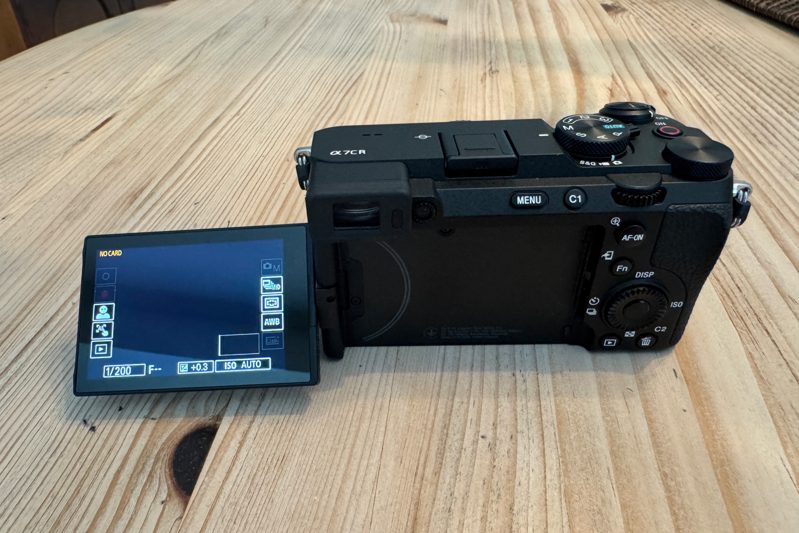
We also owned a Sony a7CR for a while: a very high-end, travel-friendly full-frame camera that packs a 61MP sensor into a body barely bigger than the a6400. It’s wonderful and very expensive, so it’s a “someday” camera, not a starter.
Cheap lenses: put a vintage lens on a Sony camera
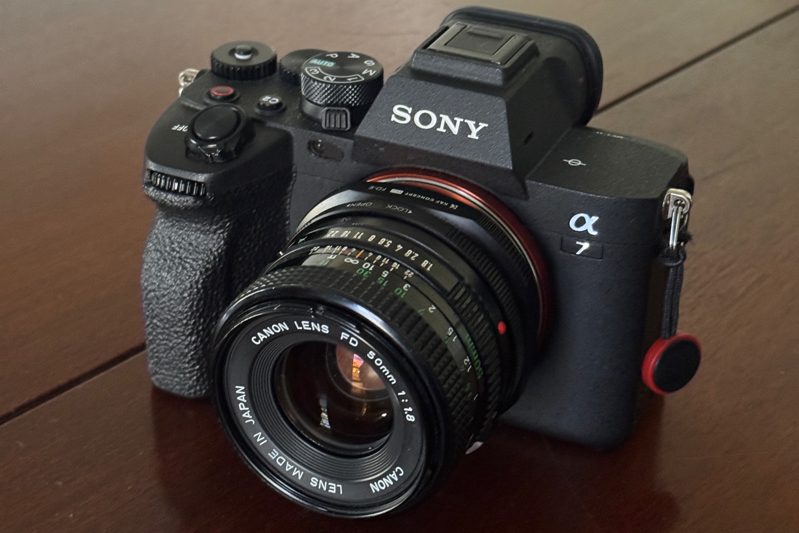
This is our favorite money-saving trick, and one of the best reasons to pick Sony. Sony’s E-mount cameras can use almost any vintage lens with an adapter. The mount sits very close to the sensor, so a simple ring adapter can hold an old SLR lens at exactly the right distance: Canon FD, Minolta MD, Pentax K, Nikon F, Olympus OM, M42 screw mount and more.
The lens in our photo is a Canon FD 50mm f/1.8 from the film era, on a K&F Concept FD-to-E adapter. Old 50mm lenses like this are some of the cheapest good glass you can buy, often well under 100 USD, and simple adapters typically cost roughly 15 to 40 USD. Compare that to several hundred dollars for a new fast prime.
How it works in practice:
- Focus is manual. Turn on focus peaking (colored outlines on whatever is sharp) and focus magnification, and it’s surprisingly quick. It’s also a great way to slow down and learn.
- Set the aperture on the lens, and use aperture priority (A mode) on the camera. The camera picks the shutter speed for you.
- Turn on “Release w/o Lens” in the menu, or the camera won’t fire, because it can’t see the adapted lens.
- On an APS-C camera like the a6400, a 50mm lens frames like a 75mm, which is a lovely portrait length.
- Expect character, not perfection. Old lenses flare more and are softer wide open. Many people buy them exactly for that look.
Buy from a seller who mentions no haze, fungus or oily aperture blades, and check that the adapter matches the lens mount, not just the camera.
Is Nikon or Canon better for beginners?
Neither brand is better overall, and both make excellent beginner cameras. Canon has more small, affordable lenses for its beginner bodies and menus many people find friendlier. Nikon cameras, like the Z50 II, tend to have deeper grips and more physical controls. Sony has the widest choice of lenses, new and vintage, and leads on video. Fujifilm leads on color straight out of the camera. Hold the cameras in a shop if you can, pick the one that feels better, and check that the lens you’ll want next exists at a price you’ll pay.
What to look for in a first camera
- Buy the system, not just the body. Lenses outlast cameras. Canon RF, Nikon Z, Sony E and Fujifilm X all have good beginner lenses, but check that the one you want exists at a price you’ll pay.
- The kit lens is fine to start. Learn what you shoot most first, then buy one lens for it. For many people that’s an inexpensive 35mm or 50mm-style prime, or a vintage 50mm on an adapter.
- A viewfinder, if you’ll shoot outdoors. Screens wash out in bright sun.
- A flip screen, if you’ll film yourself.
- Sensor size: APS-C is the sweet spot. It’s a big step up from a phone without the size and cost of full frame.
- Budget for the extras: a fast SD card, a spare battery and a simple bag. That’s often roughly 75 to 150 USD on top.
How much does a beginner camera cost?
Roughly 500 to 1,000 USD gets you a genuinely good beginner camera with a kit lens. The R100 sits at the bottom of that range, the R50 and a6400 in the middle, and the ZV-E10 II at the top. Spending more mostly buys better video, weather sealing and faster burst shooting, not better photos for a beginner. Used and refurbished cameras from reputable sellers can cut the cost a lot, and several of our own cameras were bought used. A film camera like the AE-1 Program costs less up front but more per photo.
Skip these as a first camera
- Old DSLR bundles with a pile of cheap accessories. Those 30-plus-piece bundles add filler lenses and flimsy tripods you won’t use. Buy the camera kit on its own.
- Full-frame cameras “so you won’t outgrow it.” They’re bigger, heavier and pricier, and the lenses cost more. We love our a7 IV, but we’re glad we learned on the a6400.
- Point-and-shoots that cost as much as a mirrorless camera, unless you specifically want a pocket camera. Your phone already covers casual snaps.
- More camera than you’ll carry. If it stays home, it doesn’t matter how good it is.
Our guide on why you shouldn’t buy expensive gear yet explains why starting small usually pays off.
Why is Gen Z using old cameras?
Mostly for the look. Early-2000s digital point-and-shoots give a soft, flash-heavy, slightly imperfect style that’s popular on social media, and they’re cheap secondhand. Film cameras like the AE-1 Program are back for the same reason. It’s a fun, low-cost way to start shooting. A modern camera gives you far more control, but an old one is a good way to find out whether you enjoy carrying a camera at all.
Ready to start shooting?
Our photography starter guide covers the settings that matter, your first week and the mistakes to avoid. Photography pairs well with drawing for learning composition, and it’s one of the best outdoor hobbies to take on walks and trips. For more ideas, browse our creative hobbies.
Questions people ask
What is the best starter camera for beginners?
For most people, a small APS-C mirrorless camera with a kit lens. We started on the Sony a6400 and still recommend it. The Canon EOS R50 has the friendliest menus, and the Sony ZV-E10 II is the pick if video comes first.
Should a beginner use DSLR or mirrorless?
Mirrorless. The camera makers have moved their new lenses and bodies to mirrorless, and new beginner DSLRs are hard to find. A used DSLR can be a cheap way in, but you'd be buying into a system that's winding down.
Can you use vintage lenses on a Sony camera?
Yes. Sony's E mount sits close to the sensor, so a simple adapter fits almost any old SLR lens: Canon FD, Minolta MD, Pentax K, Nikon F, Olympus OM and M42. A good vintage 50mm and an adapter often cost less than 100 USD together. Focus is manual, but Sony's focus peaking and magnification make it easy.
What is the best film camera for beginners?
The Canon AE-1 Program. It's reliable, easy to find secondhand, has a program auto mode for your first rolls and full manual control later, and its Canon FD lenses are cheap.
Is Nikon or Canon better for beginners?
Neither is better overall. Canon has more small, affordable lenses for its beginner bodies and slightly friendlier menus, while Nikon tends to have better grips and controls. Pick the one that feels better in your hand and has the lenses you want.
Why is Gen Z using old cameras?
Mostly for the look. Old digital point-and-shoots give a soft, flash-heavy, slightly imperfect style that's popular on social media, and they're cheap secondhand. Film cameras like the Canon AE-1 Program are popular for the same reason. It's a fun, low-cost start, but a modern camera gives you far more control.
How much should I spend on a first camera?
Roughly 500 to 1,000 USD gets you a genuinely good beginner camera with a kit lens. Spending more mostly buys better video, weather sealing and faster burst shooting, not better photos for a beginner.
Should I buy a used camera?
Used can be a great deal from a reputable seller with a return window and a warranty. Several of our own cameras were bought used. Check the shutter count and avoid sellers who won't take returns.
New to photography? Start with our photography beginner's guide.