Gear guide · Guitar
The Best Beginner Guitars (2026): Acoustic and Electric
The short answer
For most new players, the best beginner guitar is the Yamaha FG800, an affordable acoustic with a solid spruce top, a comfortable neck and Yamaha's famously consistent build. If it's out of stock, the Fender CD-60S is just as good a start. If you can spend a bit more, a Takamine G Series acoustic-electric is one of the best mid-range starter guitars you can buy: it was our first guitar, and we still play it. If you mostly want to play rock, blues or the songs on the radio, get an electric instead: the Squier Sonic Stratocaster Pack comes with an amp and everything else you need.
Our picks at a glance
| Pick | Label | Best for | Roughly | Buy |
|---|---|---|---|---|
| Yamaha FG800 Acoustic Guitar | Community favorite | Best first acoustic overall | 200–280 USD | Check price ↗ |
| Fender CD-60S Dreadnought | Researched pick | Best alternative acoustic | 200–250 USD | Check price ↗ |
| Takamine G Series acoustic-electric | Used it | Best mid-range starter guitar | 450–800 USD | Check price ↗ |
| Yamaha JR1 3/4-Size Acoustic Guitar | Researched pick | Best for kids and small hands | 150–200 USD | Check price ↗ |
| Squier Sonic Stratocaster Pack | Researched pick | Best electric starter bundle | 300–370 USD | Check price ↗ |
| Yamaha Pacifica PAC112V | Community favorite | Best electric to grow into | 350–400 USD | Check price ↗ |
1.Yamaha FG800 Acoustic Guitar
Best for: Best first acoustic overall
Why: A solid spruce top, an easy neck and Yamaha's consistent quality. It's the guitar players and teachers suggest to beginners more than any other.
The catch: It's a big full-size dreadnought body, it has no pickup for plugging in, and like most factory guitars it plays better after a basic shop setup.
2.Fender CD-60S Dreadnought
Best for: Best alternative acoustic
Why: A solid spruce top, a slim neck and rolled fretboard edges that are kind to new hands. Also sold as a pack with a bag, strap, strings and picks.
The catch: Reviewers find its low end a little less full than the Yamaha's, and bundle contents vary by store.
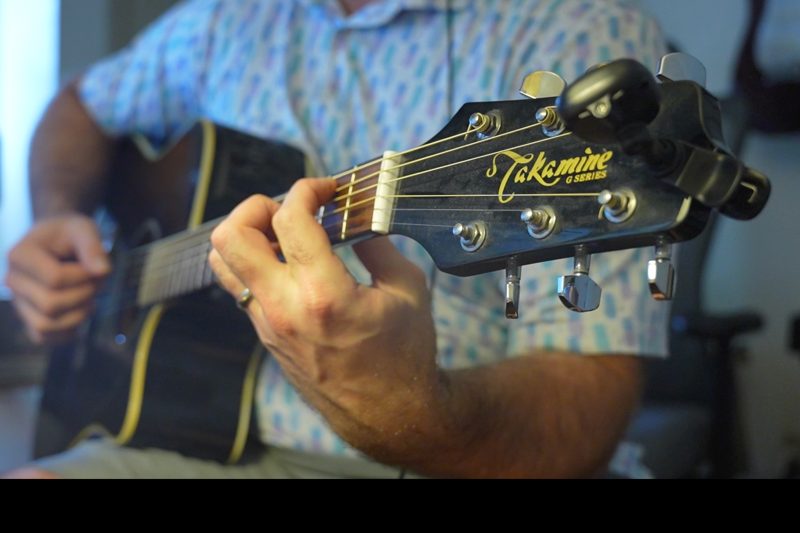 ✓ Used it · our first guitar, 15 years
3.Takamine G Series acoustic-electric
Best for: Best mid-range starter guitar
Why: Sounds great, plays great and won't let you down, with a built-in pickup and tuner so it's ready for recording or a gig. A guitar you won't outgrow.
The catch: Costs two to three times as much as the FG800, and the neck feels chunkier than some players like.
4.Yamaha JR1 3/4-Size Acoustic Guitar
Best for: Best for kids and small hands
Why: A 3/4-size guitar with a shorter scale, so the frets are closer together. It's a real instrument, not a toy, and it comes with a gig bag.
The catch: The small body sounds smaller and quieter, and most adults and older kids outgrow it as a main guitar.
5.Squier Sonic Stratocaster Pack
Best for: Best electric starter bundle
Why: Guitar, Frontman 10G amp, cable, strap, picks and a gig bag in one box, ready to play on day one.
The catch: The little amp is basic, and the tremolo bridge can let the tuning drift a little.
6.Yamaha Pacifica PAC112V
Best for: Best electric to grow into
Why: Better pickups and hardware than most guitars at the price, and a pickup layout that covers clean, bluesy and rock sounds.
The catch: Guitar only, so budget for an amp or headphone amp on top.
Finding the best beginner guitar is less about specs and more about one question: will you want to pick it up every day? This list covers the guitars that new players, teachers and long-time guitar communities recommend again and again, both acoustic and electric. Each one has a clear “who it’s for” and an honest catch.
Not sure guitar is your thing yet? Start with our guitar guide for beginners. It covers what learning is really like, the first month and the mistakes that make people quit.
How we chose
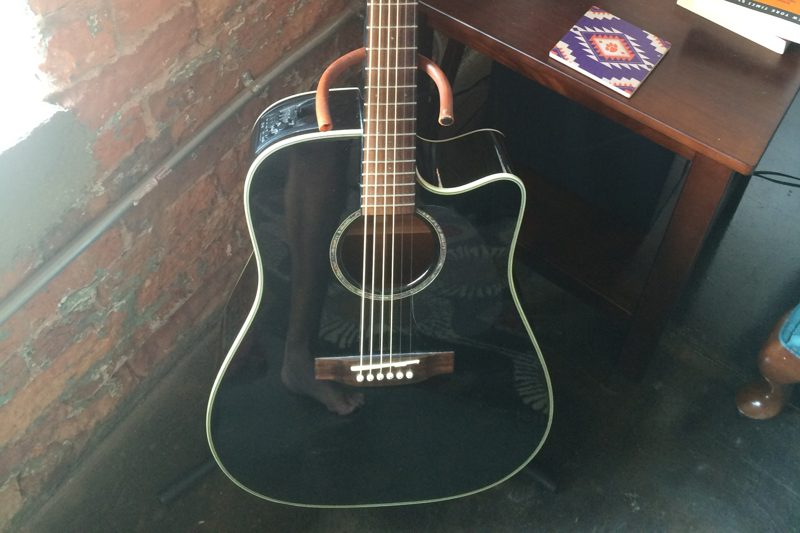
Our first guitar was a black Takamine G Series, and after about 15 years it’s still one we play and record with, so that pick is first-hand. We also play a Fender Stratocaster and a Cordoba Stage nylon-string, and use the accessories below. The other guitars we haven’t owned, so for those we read the makers’ spec sheets, the long-running advice on r/Guitar and r/guitarlessons, and reviews from established guitar publications and teachers. Then we filtered for what matters most to someone who has never played:
- Playability. Low, comfortable strings and a neck your hand can get around. For a first guitar this matters more than tone.
- It stays in tune. Cheap tuners and poor setups make practice frustrating fast.
- Consistency. Yamaha and Fender make huge numbers of the same model, so the one that arrives at your door is very likely to be a good one.
- A guitar you actually want to pick up. Looks count. People practice more with a guitar they like.
- Price, weighed against all of the above.
Each pick’s label says how it was chosen. How we choose.
Acoustic or electric guitar for beginners?
This is the question every beginner asks, and the honest answer is: get the type of guitar that plays the music you love. You’ll practice more if what comes out sounds like the songs in your head.
- Acoustic is simpler. There’s nothing to plug in, and you can play anywhere. The strings are heavier, though, so your fingertips will be sore for the first couple of weeks. It’s best for folk, pop, singer-songwriter and campfire songs.
- Electric is easier on your fingers, because the strings are lighter and sit closer to the neck. But you’ll need an amp (or headphones and an app), which nudges the starting cost up a little. It’s best for rock, blues, metal and most lead playing.
The common teacher advice is simple: if you’re torn, start on the one you’d rather listen to. The skills transfer both ways. Chord shapes, strumming and the notes on the neck are the same on both, so switching later costs you very little.
Which beginner guitar should you get?
Yamaha FG800: the best acoustic guitar for beginners
The FG800 is the guitar that comes up again and again when players and teachers are asked what a beginner should buy. Yamaha redesigned it in 2016 and it has been a beginner staple ever since. It has a solid spruce top, which sounds richer than the laminated tops on many guitars at this price and tends to open up as it’s played. Yamaha’s scalloped bracing gives it a full, loud dreadnought sound, and the neck is slim and easy to get around.
Who it’s for: teens and adults who want one acoustic that will last well past the beginner stage, for strumming chords, singing along and learning fingerpicking.
Worth knowing: it’s a full-size dreadnought, which is a big body for smaller players and for children. There are no electronics, so you can’t plug it into an amp or PA. The FGX800C version adds a pickup and a cutaway. And like nearly every guitar shipped from a factory, it plays better after a basic setup at a local guitar shop. If the dreadnought shape feels too big, the FS800 is the same idea in a smaller “concert” body.
Fender CD-60S: best alternative acoustic
The CD-60S is the FG800’s main rival, and plenty of beginner roundups put it at the top of their lists. It’s also a dreadnought with a solid spruce top, with mahogany back and sides. Its big advantage for beginners is comfort. Fender rolled the edges of the fretboard, and the neck is slim, which makes early chords a little easier on your hand. The tone is warm and mellow. Fender also sells it as a pack with a gig bag, strap, strings and picks, which makes it a tidy gift.
Who it’s for: anyone who finds the FG800 out of stock, prefers the Fender name, or has smaller hands and wants a slim, comfortable neck.
Worth knowing: reviewers say the low end is a bit less full than the Yamaha’s, so if you’ll mostly strum big open chords, the FG800 sounds bigger. Specs and bundle contents vary by version and by store, so check which CD-60S you’re getting.
Takamine G Series: the best mid-range starter guitar
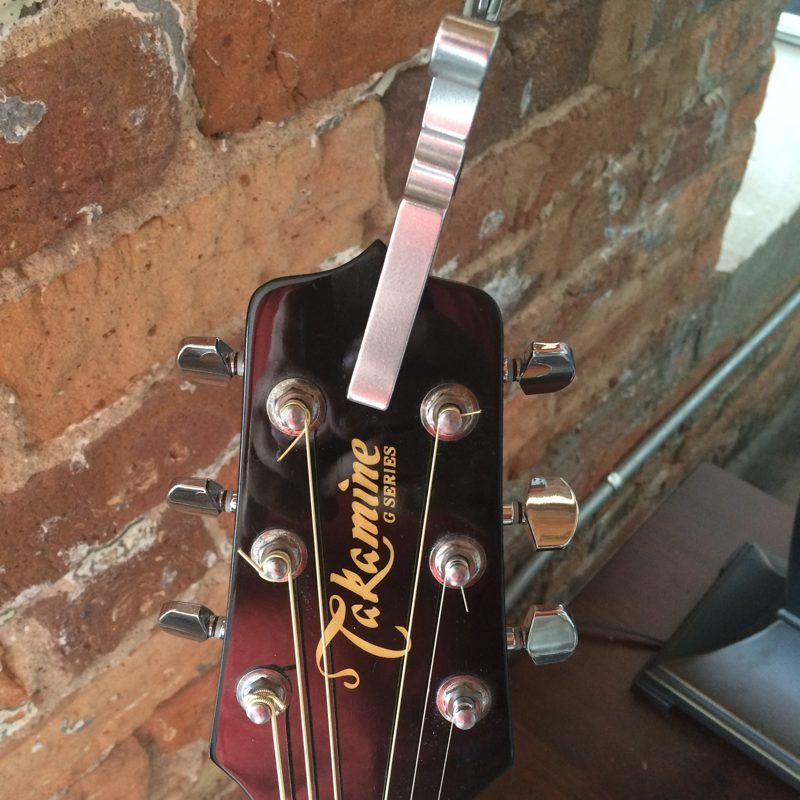
This is the guitar we learned on: a black Takamine G Series dreadnought with a cutaway and a built-in pickup. It’s been our old reliable for about 15 years, and it still never fails us. If we had to pick a single nice beginner-to-intermediate guitar, this would be it. It sounds great, plays great and won’t let you down.
Takamine’s G Series is the company’s affordable line, sitting a step above the true budget guitars. Most models are acoustic-electrics with a cutaway (for reaching the high frets) and an onboard preamp with a built-in tuner, so you can plug straight into an amp, a PA or an audio interface. That makes it a great guitar for recording yourself, too. Popular models include the GD30CE and the solid-top GD71CE.
Who it’s for: beginners who are fairly sure they’ll stick with guitar, want one acoustic that will last for years, and like the idea of plugging in to record or play out.
Worth knowing: it costs noticeably more than the FG800 or CD-60S. Our Takamine has a fairly full, rounded neck. We love it, mostly because we learned on it, but players with small hands should try one first. Model names and specs change from year to year, so check the exact model, and whether the top is solid or laminate, before you buy.
Yamaha JR1: best guitar for kids and small hands
A full-size guitar is genuinely hard for a young child to hold and fret. The JR1 is a 3/4-size acoustic modeled on Yamaha’s FG series, with a spruce top and a shorter scale (about 540 mm, or 21.25 inches), so the frets are closer together. It comes with a gig bag, and adults buy it as a travel guitar too. (For a full-scale travel guitar that fits an overhead bin, see this Traveler nylon-string guitar review.)
Who it’s for: children roughly 6 to 10, smaller adults, or anyone who wants a guitar to toss in the car.
Worth knowing: the small body sounds smaller and quieter than a dreadnought, and most adults outgrow it as a main guitar. Many kids around 11 and up can handle a full-size guitar or a smaller-bodied one like the Yamaha FS800, so check the fit before you buy. If you can, have your child hold one in a shop: they should be able to reach the first fret without stretching their arm straight.
Squier Sonic Stratocaster Pack: the best electric guitar for beginners on a budget
Squier is Fender’s budget brand, and the Sonic Stratocaster is its entry-level Strat. It has a thin, light poplar body, a comfortable C-shaped maple neck and three single-coil pickups for the classic Strat sound. The pack adds a Fender Frontman 10G practice amp, a cable, a strap, picks and a gig bag, plus a trial of Fender’s own lesson app, so it’s ready to play out of the box.
Who it’s for: beginners who want to play rock, blues, indie or pop, and parents buying a first electric who want one box under the tree.
From our own playing: we play a Fender Stratocaster that once belonged to the friend who taught us guitar, and the Strat’s range of sounds, from blues to fingerstyle to hard rock, is why it’s a legend. Don’t let the cheaper branding fool you, either: Squier Strats are very good these days, and you don’t need an American-made Strat to love playing.
Worth knowing: the 10-watt amp is basic, and many players replace it within a year or switch to headphones and an app. The tremolo bridge can make tuning drift a little. If you never plan to use the whammy bar, the hardtail “HT” version of the Sonic Strat avoids that.
Yamaha Pacifica 112V: best electric to grow into
The Pacifica 112V has been a quiet community favorite for years, because it punches above its price. It has an alder body and a versatile pickup layout: two single-coils plus a humbucker at the bridge. A coil-split on the tone control gets you both clean, sparkly sounds and thicker rock tones from one guitar, and its Alnico V pickups are a step up from the ceramic pickups on many budget electrics.
Who it’s for: beginners who are fairly sure they’ll stick with it and want an electric they won’t need to replace in a year.
Worth knowing: it’s guitar only, so budget for an amp or a headphone amp on top. That puts it close to 100 USD more than the Squier pack once you add an amp. Stock has come and gone on Yamaha’s own store, so check other retailers. The cheaper Pacifica 012 is a closer match to the Squier on price.
What should you practice through on an electric?
You need something to plug into, but it doesn’t have to be big. There are three common routes:
- A small practice amp, like the 10-watt amp in the Squier pack. Simple and good enough for months.
- A headphone amp that plugs straight into the guitar. Great for apartments and late-night practice. We use the Fender Mustang Micro for practice and for recording on the road. It can even play through any speaker with an aux input.
- An audio interface and a free amp app on a computer or tablet. The most sounds for the money, but the most fiddly to set up. For recording at home we use a Focusrite Scarlett Solo: clean sound into the computer, a standard 1/4-inch guitar input and good headphone output, for not much more than a headphone amp.
Most beginners do fine with whatever comes in the box at first. Upgrade once you know what music you’re making.
The extras you actually need
- A clip-on tuner. It’s the most useful thing you’ll buy after the guitar. The Snark SN5X is a long-time cheap favorite, and we keep a Fender FCT-2 clip-on tuner in every gig bag. Tuning apps (or a free online guitar tuner) work too, but a clip-on is faster and works in a noisy room.
- Picks. Buy a mixed pack of thin and medium picks to find what you like, such as the Dunlop Light/Medium variety pack.
- A strap and a stand or wall hanger. A guitar you can see is a guitar you’ll pick up.
- For electric: a cable and an amp, or a headphone amp if you need to practice quietly.
- A setup. Ask a local guitar shop to adjust your guitar’s string height and check the neck. It’s usually a modest fee, and it can make an inexpensive guitar feel like a much better one.
Skip the slide, the effects pedals and the big accessory bundles until you’ve been playing for a few months. When you do want a capo, just get a Shubb capo. It’s the classic design, adjusts easily for any guitar and has no springs to wear out. Our guide on why you shouldn’t buy expensive gear yet explains why waiting pays off. If you’re shopping for someone else, our gifts for guitar players guide has more ideas.
What to look for in a first guitar
- Low action. “Action” is how high the strings sit above the fretboard. Lower is easier to press. A shop can adjust it.
- The right size. Full-size dreadnoughts are big. Smaller-bodied concert or parlor guitars and 3/4 sizes suit smaller players.
- A known brand. Yamaha, Fender, Squier, Epiphone, Ibanez and similar brands are consistent, and they hold some resale value if you stop.
- A solid top on acoustics, if your budget allows. It’s not essential, but it usually sounds better and ages well.
- A returns policy. Buy from a store that lets you return it, or play it in a shop first.
How much does a beginner guitar cost?
Roughly 200 to 300 USD buys a genuinely good first acoustic from a major brand. A good electric with an amp runs roughly 300 to 400 USD. Below about 150 USD, playability usually suffers: higher action, rougher frets and tuners that slip. Spending much more than 300 to 400 USD mostly buys tone and finish, not easier playing, so it can wait until you know you’ll stick with it.
Skip these as a first guitar
- No-name “starter kits” under 100 USD with a guitar, amp, tuner, strap, capo and 20 accessories. The guitar is usually the weak point, and a guitar that’s hard to play is one of the most common reasons beginners give up.
- Traditional classical (nylon-string) guitars, unless you want to play classical, flamenco or bossa nova. They’re easier on your fingertips, but the very wide, flat neck and soft sound don’t suit most pop and rock. If you love the warm nylon sound, look at a crossover guitar instead. Our main recording guitar is a Cordoba Stage, with a 48mm neck that sits between classical and steel-string widths, so chords feel familiar. More on classical vs. acoustic guitars, and the rest of our recording setup is in this gear for guitar YouTubers roundup.
- Twelve-string guitars, seven-string guitars and anything with a Floyd Rose locking tremolo. They’re harder to play, tune and restring.
- Very expensive guitars “so you’ll be motivated.” A 250 USD guitar with a good setup is plenty for the first year or two.
How often should beginners practice guitar?
Short and often beats long and rare. Fifteen to 30 minutes most days is the standard teacher advice for your first months. Daily practice toughens your fingertips faster, and it builds the muscle memory for chord changes. A simple routine works: five minutes tuning and warming up, ten minutes on one chord change, and the rest on a song you like.
What’s the best first song to play on guitar?
Pick a song you love that uses two to four open chords. Classic first songs include “Horse with No Name” (two chords), “Knockin’ on Heaven’s Door” and “Wonderwall.” For chord shapes, Jamwise’s free guitar chord chart has every common chord, and when you’re ready for more than strumming, its easy fingerstyle songs come with free tabs.
Ready to start?
Our guitar starter guide covers your first week and first month, plus the best free lessons. Tabs and songs to learn are on Jamwise, our sister site. If you want something smaller and easier first, try the ukulele and our best beginner ukulele picks. If you’d like to learn chords and melody together, see piano and our best beginner keyboard picks. Looking for more ideas? Browse our creative hobbies.
Questions people ask
What is the best guitar for a beginner?
For most people, a well-made acoustic like the Yamaha FG800 or Fender CD-60S. If you can spend more, a Takamine G Series acoustic-electric is a guitar you won't outgrow. If the music you love is rock or blues, an electric like the Squier Sonic Stratocaster Pack is the better first guitar.
Is Takamine a good guitar brand for beginners?
Yes. Takamine's G Series is one of the best mid-range starter lines: well made, great sounding and usually fitted with a pickup and tuner. Our first guitar was a G Series, and we still play it about 15 years later.
Is 30 too late to learn guitar?
No. Plenty of people start at 30, 50 or 70. Adults often progress quickly at first because they practice deliberately, and regular practice matters far more than age.
How often should beginners practice guitar?
Short and often beats long and rare. Fifteen to 30 minutes most days is a good target for your first months, and it gives your fingertips time to toughen up.
Can I learn guitar in 3 months?
You can learn the basics in 3 months: several open chords, changes between them and a handful of full songs. Getting good takes longer, but regular practice gets most people playing songs they enjoy within that time.
What is the best first song to play on guitar?
A song you love that uses two to four open chords. "Horse with No Name" uses two chords, and "Knockin' on Heaven's Door" and "Wonderwall" are other classic first songs.
How much should I spend on a first guitar?
Roughly 200 to 300 USD buys a genuinely good first acoustic, and roughly 300 to 400 USD a good electric with an amp. Much below that, playability usually suffers.
Is acoustic or electric guitar better for beginners?
Whichever plays the music you love. Electric is easier on your fingers, and acoustic is simpler because there's nothing to plug in.
New to guitar? Start with our guitar beginner's guide.