Gear guide · Piano
The Best Keyboards for Beginners (2026): 61-Key and Digital Piano Picks
The short answer
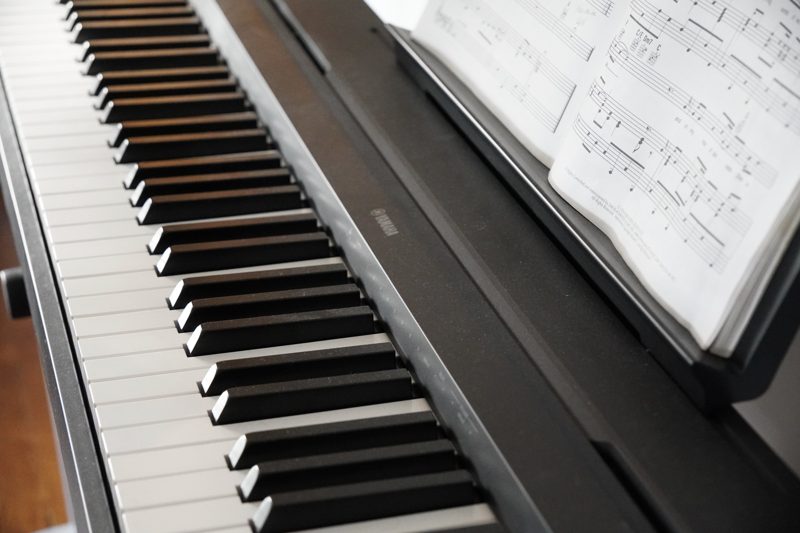
We strongly recommend weighted keys. If you want to learn piano properly, the best beginner keyboard is really an 88-key digital piano with weighted keys, because they feel like a real piano and build the right finger strength from day one. The Yamaha P-145 is the most affordable one from a major brand, and a used Yamaha P-45, the model we play, is a great deal. If your budget or space is tight, or you're buying for a child or a casual player, a 61-key keyboard with touch-sensitive keys is fine to start. The Yamaha PSR-E383 is the classic choice, packed with lessons and sounds.
Our picks at a glance
| Pick | Label | Best for | Roughly | Buy |
|---|---|---|---|---|
| Yamaha PSR-E383 | Community favorite | Best 61-key keyboard overall | 200–250 USD | Check price ↗ |
| Casio Casiotone CT-S1 | Researched pick | Best simple, stylish 61-key | 230–280 USD | Check price ↗ |
| Yamaha NP-15 Piaggero | Researched pick | Best piano-focused 61-key | 250–300 USD | Check price ↗ |
| Yamaha P-145 (or P-145BT with Bluetooth) | Community favorite | Best budget 88-key digital piano | 500–600 USD | Check price ↗ |
| Yamaha P-45 (used) | Used it | Best used digital piano | 300–500 USD used | Check price ↗ |
| Roland FP-30X | Community favorite | Best digital piano to grow into | 700–850 USD | Check price ↗ |
| Alesis Recital Pro MKII | Researched pick | Cheapest 88-key hammer action | 380–500 USD | Check price ↗ |
1.Yamaha PSR-E383
Best for: Best 61-key keyboard overall
Why: Touch-sensitive keys, built-in lessons that check your timing and touch, and hundreds of sounds and backing styles.
The catch: Unweighted keys, so it won't build piano finger strength, and all those sounds can distract from practice.
2.Casio Casiotone CT-S1
Best for: Best simple, stylish 61-key
Why: A lovely stereo piano sound, a clean design that doesn't look like a toy, and battery power so it goes anywhere.
The catch: No built-in lesson system, so you'll learn from an app, a teacher or videos.
3.Yamaha NP-15 Piaggero
Best for: Best piano-focused 61-key
Why: Light, slim and built around a small set of good piano and electric piano voices instead of hundreds of sounds.
The catch: 61 keys will limit you once you reach classical pieces, and the speakers are small.
4.Yamaha P-145 (or P-145BT with Bluetooth)
Best for: Best budget 88-key digital piano
Why: Weighted, graded hammer-action keys and a concert-grand piano sound from the biggest name in pianos.
The catch: About twice the price of a 61-key keyboard, and you'll still want a stand, a bench and a better pedal.
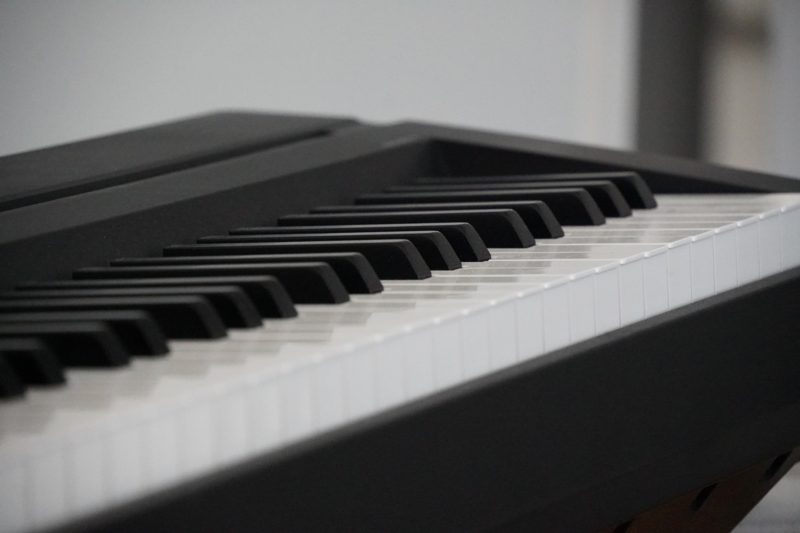 ✓ Used it · the one we play
5.Yamaha P-45 (used)
Best for: Best used digital piano
Why: 88 weighted, graded hammer-action keys, a clear Yamaha piano sound and a simple, sturdy design. It's the model the P-145 replaced, and it still holds up.
The catch: Discontinued, so you're buying used, and it has only a handful of sounds and a basic footswitch pedal.
6.Roland FP-30X
Best for: Best digital piano to grow into
Why: Roland's PHA-4 Standard action with escapement, the SuperNATURAL piano sound, strong speakers and Bluetooth for apps.
The catch: Costs noticeably more than the P-145 and weighs about 33 pounds.
7.Alesis Recital Pro MKII
Best for: Cheapest 88-key hammer action
Why: A full 88-key weighted keyboard with adjustable touch, 25 sounds, a teacher-student lesson mode and a sustain pedal in the box.
The catch: Owners and teachers often rate the key feel and piano sound a step below Yamaha and Roland, and resale value is lower.
The best beginner keyboard depends on one decision you should make before you look at any model: do you want a keyboard or a digital piano? This guide answers that first, then explains how many keys you need, then lists the instruments that teachers, piano forums and reviewers recommend most, each with a plain “who it’s for” and an honest catch.
Not sure piano is for you yet? Our piano guide for beginners covers what learning is really like, the first month and the best free lessons.
How we chose
The keyboard we play at home is a Yamaha P-45, the 88-key weighted digital piano that came before today’s P-145, so that pick is first-hand. The rest we haven’t owned. For those we read the makers’ spec sheets, the long-running advice on r/piano and r/pianolearning, and reviews from piano teachers and music publications. Then we filtered for what matters most in a first keyboard:
- Full-size, touch-sensitive keys. The harder you press, the louder the note. Without this, you can’t learn to play with expression.
- Enough keys. 61 is the minimum for most beginner music. 88 is a full piano.
- Key action. Weighted or “hammer action” keys feel like a real piano and build finger strength. Unweighted keys are lighter and cheaper.
- A sustain pedal input. You’ll want a pedal within a few months.
- A trusted brand, with good resale value and easy-to-find accessories.
Each pick’s label says how it was chosen. How we choose.
Keyboard or digital piano?
This is the question that decides your budget, so it’s worth getting right.
- A keyboard (usually 61 keys) is light, cheap and portable, with lots of built-in sounds, rhythms and lesson modes. The keys are unweighted, so it feels more like pressing buttons than playing a piano. It’s great for kids, for casual players and for anyone who mostly wants to play pop chords or make music on a computer.
- A digital piano (88 keys) has weighted, hammer-action keys and focuses on realistic piano sound. It’s heavier and costs more, but if you want piano lessons or plan to play classical music, it’s the right tool. Many piano teachers recommend weighted keys from the start, because moving over later means getting used to a heavier touch.
A simple rule of thumb: if the goal is “learn piano,” buy a digital piano if you can. If the goal is “have fun making music,” a keyboard is plenty.
Why we recommend weighted keys
If there’s one piece of advice we’d give every new piano player, it’s this: get a keyboard with weighted keys. They mimic the weight of a real piano’s keys, and that matters more than any number of sounds, rhythms or lights.
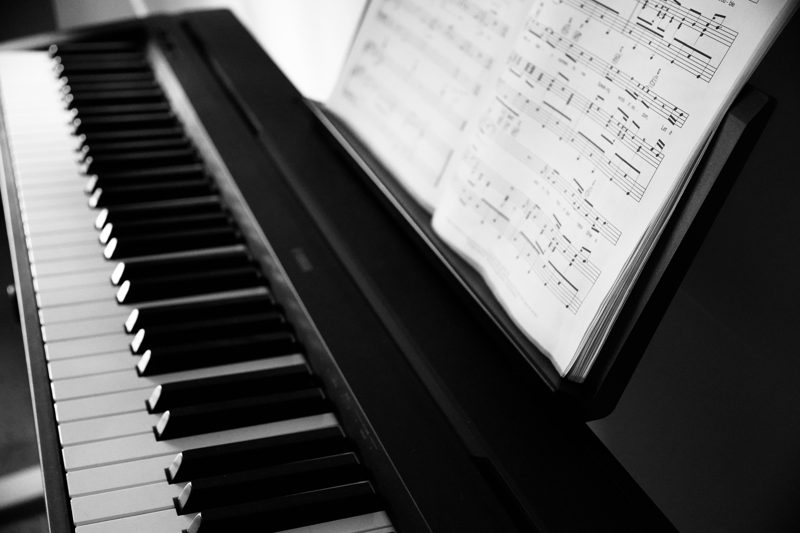
On an acoustic piano, every key lifts a small felt hammer that strikes the strings. You can feel that hammer: the key pushes back, and the low notes, with their bigger hammers, push back more than the high ones. Weighted digital pianos copy that feel with their own hammer mechanism, and the better ones are “graded,” heavier in the bass and lighter in the treble, just like the real thing.
Here’s why that’s worth paying for:
- Your technique transfers. Practice on light, springy keys and a real piano feels heavy and sluggish the first time you sit at one. Practice on weighted keys and you can play any piano: at a friend’s house, at a lesson, at school.
- You build finger strength and control. Weighted keys train your fingers to press with intention, which is what lets you play evenly and quickly later.
- You learn to play softly and loudly. Playing with expression (“dynamics”) is about controlling how fast the key goes down. It’s much easier to learn when the key resists you a little, the way a piano does.
- You won’t have to relearn. Many people who start on unweighted keys hit a wall when they switch, and spend weeks getting used to the heavier touch.
- It simply feels better. Weighted keys feel like an instrument, not a row of buttons, and an instrument you enjoy playing is one you practice on.
A few terms you’ll see in listings: weighted or hammer action keys are the real thing. Graded hammer action adds the heavier-bass feel. Semi-weighted keys have some resistance from springs but no hammer, a middle ground found on many MIDI controllers. And touch-sensitive (or velocity-sensitive) only means the keyboard plays louder when you press harder. It’s essential, but it isn’t the same as weighted. A 61-key touch-sensitive keyboard can be a reasonable start for a young child or a casual player, but if the goal is learning piano, weighted keys are worth the jump.
How many keys does a beginner keyboard need?
- 61 keys covers almost all beginner books, pop songs and chord playing. It’s the right minimum.
- 76 keys is a middle ground with more room for two-handed pieces.
- 88 keys is a full piano. You’ll need it for most classical music once you’re past the early books.
Skip anything under 61 keys or with mini keys, unless it’s a toy for a small child.
Which beginner keyboard should you get?
Yamaha PSR-E383: the best 61-key beginner keyboard
Yamaha’s PSR-E line has been the default beginner keyboard for a long time, and the PSR-E383 is the current mid-range model. It has 61 touch-sensitive keys with adjustable touch, more than 600 sounds and hundreds of accompaniment styles. More important for beginners, it has built-in lessons and a tutor feature that gives feedback on your timing and how hard you press. It runs on a power adapter or AA batteries, and its USB port connects to a computer or tablet for apps.
Who it’s for: kids, teens and adults who want an affordable, fun keyboard that teaches as well as plays.
Worth knowing: the keys aren’t weighted, so it won’t build the same finger strength as a piano. With so many sounds and styles, it’s easy to get distracted from actual practice. A sustain pedal and a stand usually cost extra.
Casio Casiotone CT-S1: best simple, stylish 61-key
The CT-S1 takes the opposite approach to the Yamaha. Instead of hundreds of sounds, it has a carefully tuned stereo grand piano and about 60 other tones, in a clean, minimal design that looks good in a living room. It has 61 full-size touch-sensitive keys, runs on an adapter or AA batteries, and its USB connection works with Casio’s free app. It comes in black, white and red.
Who it’s for: adults who mainly want a good piano voice and a keyboard that doesn’t look like a toy.
Worth knowing: there’s no built-in lesson system like the Yamaha’s, so you’ll learn from an app, a teacher or videos. Bluetooth needs an optional adapter. Casio’s own store has shown it out of stock at times, so check other retailers.
Yamaha NP-15 Piaggero: best piano-focused 61-key
The NP-15 sits between a keyboard and a digital piano. It has 61 touch-sensitive keys with a slightly more piano-like feel than the PSR line, and it’s built around a small set of good voices, mostly pianos and electric pianos, rather than hundreds of sounds. It’s light and slim, so it’s easy to move and store. Its USB port connects to Yamaha’s Smart Pianist app.
Who it’s for: beginners who want to focus on piano, not drum beats and sound effects, but who don’t have room or budget for an 88-key piano.
Worth knowing: 61 keys will limit you as you move into classical pieces, and the speakers are small. If you can stretch to 76 keys, the NP-35 is the same idea with more range.
Yamaha P-145: the best budget digital piano for beginners
The P-145 is Yamaha’s entry-level portable digital piano, and Yamaha’s P-series has been the go-to answer to “what digital piano should a beginner buy?” for years. It has 88 keys with Yamaha’s Graded Hammer Compact action, which is heavier in the bass and lighter in the treble, like an acoustic piano. Its main piano sound is sampled from Yamaha’s CFIIIS concert grand. The P-145BT version adds Bluetooth audio and MIDI for apps.
Who it’s for: anyone taking piano lessons, or adults who are serious about learning and want to buy once.
Worth knowing: it costs about twice as much as a 61-key keyboard. It also needs a stand, a bench and a better sustain pedal than the basic footswitch, which can add 100 USD or more. And it has just a handful of sounds: it’s a piano first.
Looking to save money? The P-145 replaced the Yamaha P-45, which we play at home. Used P-45s are easy to find and often cost much less than a new P-145, with the same idea: 88 weighted, graded keys and a good Yamaha piano sound.
Yamaha P-45: the best used digital piano
The P-45 is the keyboard we actually play, and the one in the photos on this page. It’s an 88-key digital piano with Yamaha’s Graded Hammer Standard (GHS) action, a sampled Yamaha grand piano sound, a handful of other voices (electric pianos, organ, strings) and a USB port for apps and recording. It’s light enough for one person to move and slim enough to sit on a table or a simple X-stand.
Who it’s for: beginners who want weighted keys on a budget, and anyone happy to buy used to save money.
Worth knowing: it’s discontinued, so you’ll buy secondhand. Check that every key plays at an even volume and that nothing clicks or sticks. The included footswitch is basic, so plan on a piano-style sustain pedal. Its speakers are modest, which is fine for a bedroom and perfect with headphones.
Keyboard or P-145 for a child starting lessons? Most teachers would rather a student practiced on weighted keys, so if lessons are the plan and the budget allows, the P-145 is the safer buy. If you’re not sure the interest will last, a 61-key keyboard for the first few months is a reasonable test, as long as you plan to upgrade once lessons get going.
Roland FP-30X: best digital piano to grow into
The FP-30X is the piano r/piano regulars most often suggest when someone asks what to buy one step up. It uses Roland’s PHA-4 Standard keyboard, with an escapement feel and textured “ivory feel” keys. It has Roland’s SuperNATURAL piano sound, 256-note polyphony, stronger speakers than most portables and Bluetooth audio and MIDI. It also has two headphone jacks, so a teacher or parent can listen in.
Who it’s for: beginners who are sure they’ll stick with it, and families who want one piano that will last through years of lessons.
Worth knowing: it costs noticeably more than the P-145, and it’s heavier at about 33 pounds. For complete beginners the difference in feel is real but not essential. Roland’s cheaper FP-10 is the budget alternative.
Alesis Recital Pro MKII: cheapest 88-key hammer action
Alesis is the brand many people buy when they want 88 weighted keys for less than Yamaha or Roland charge. The Recital Pro MKII has 88 full-size hammer-action keys with five touch settings, 20 watts of built-in speakers, 25 sounds, and a lesson mode that splits the keyboard into two identical halves so a teacher and student can play side by side. Unlike many budget pianos, it comes with a sustain pedal and a music rest.
Who it’s for: budget-minded adult beginners who want a full, weighted keyboard.
Worth knowing: owners and teachers often say the key action and piano sound are a step below Yamaha’s and Roland’s, and resale value is lower. The original Recital Pro is still widely sold, often for roughly 380 USD. It has fewer sounds and doesn’t include a pedal, so check which model you’re getting and budget for a pedal if you pick the original.
The extras you actually need
- A sustain pedal. Most keyboards come with a tiny plastic footswitch, or none at all. A piano-style pedal like the M-Audio SP-2 feels much better.
- A stand and a bench. Sitting at the right height, with your forearms level with the keys, matters more than people think.
- Headphones, so you can practice at night without an audience.
- A learning app or teacher. Built-in lessons are a start, but most people progress faster with a teacher, a structured app or a good video course. A common pattern is an app or videos for the first few months, then a teacher once you know you’ll stick with it.
Shopping for someone else? Our gifts for musicians guide has ideas at every budget. And before you spend on upgrades, read why you shouldn’t buy expensive gear yet.
What to look for in a beginner keyboard
- Touch-sensitive keys. Non-negotiable. Skip any keyboard that doesn’t have them.
- Full-size keys. Mini keys are for toys and travel controllers.
- At least 61 keys. 76 or 88 if you plan on classical music or lessons.
- Weighted keys if you’re aiming for piano lessons.
- A sustain pedal jack and a headphone jack.
- USB or Bluetooth for apps and recording.
How much should a beginner keyboard cost?
Roughly 150 to 300 USD buys a good 61-key keyboard from Yamaha or Casio. A good 88-key weighted digital piano starts at roughly 450 to 600 USD, and step-up models like the Roland FP-30X run higher. Below about 100 USD, keyboards usually lack touch sensitivity or full-size keys. Remember to budget for a stand, a bench, headphones and a pedal on top.
Skip these as a first keyboard
- Mini-key and 32-key keyboards, unless it’s for a small child. You’ll outgrow them in weeks.
- Keyboards without touch sensitivity. You can’t learn dynamics on them.
- MIDI controllers with no speakers, unless you already make music on a computer.
- “Light-up keys” gimmick keyboards. Fun at first, but they encourage following lights instead of reading music.
Can you learn piano on a keyboard?
Yes. A 61-key touch-sensitive keyboard is enough to learn to read music, play chords, use both hands together and play lots of songs. The limits show up later: unweighted keys don’t build the same finger control, and classical pieces soon need more than 61 keys. If you get serious, move to a weighted digital piano so your technique carries over to a real piano. Better yet, start on weighted keys, and you’ll never have to make that switch.
Ready to start?
Our piano starter guide covers your first week, a simple practice routine and the best free lessons. If you’d rather play chords on strings, see our best beginner guitar picks or try the ukulele. For more ideas you can do at home, browse our indoor hobbies.
Questions people ask
How many keys should a beginner keyboard have?
At least 61. That covers almost all beginner music and most pop songs. If you're taking piano lessons or want to play classical music, 88 keys is better, because you'll want the range within a year or two.
How much should a beginner keyboard cost?
Roughly 150 to 300 USD buys a good 61-key keyboard from Yamaha or Casio. A good 88-key weighted digital piano starts at roughly 450 to 600 USD. Below about 100 USD, keyboards usually lack touch sensitivity or full-size keys.
What is the best age to start piano lessons?
Many teachers start children somewhere around 5 to 8, once they can focus for a short lesson and know their letters and numbers. There's no upper limit. Adults learn well too, often quickly at first, because they practice with focus.
What is the best 88-key keyboard for beginners?
The Yamaha P-145 is the best 88-key digital piano for most beginners: weighted, graded keys and a good piano sound at a budget price. The Alesis Recital Pro MKII is the cheapest 88-key option with hammer action, and the Roland FP-30X is the one to grow into.
Are there left-handed piano keyboards?
No, and you don't need one. Piano uses both hands equally, so left-handed and right-handed players learn on the same keyboard. Many left-handed players find their left hand has a slight head start on bass parts.
Can you get a good keyboard for under 50 USD?
Not one we'd recommend for learning. Keyboards under about 100 USD usually have small, non-touch-sensitive keys that make it hard to learn to play softly and loudly. A used 61-key Yamaha or Casio is a better way to spend very little.
Is the Yamaha YPT-300 a good beginner keyboard?
The YPT-300 is an older Yamaha beginner keyboard that was sold through big retail stores, a cousin of the PSR-E line of its day. A good used one at a low price is a fine first keyboard. New, look at the current PSR-E383 instead.
Do beginners need weighted keys?
We strongly recommend them. Weighted keys mimic the feel of a real piano, so your finger strength and control carry over to any piano you sit at. A touch-sensitive 61-key keyboard can work for a young child or a casual player, but anyone learning piano should get weighted keys if they can.
Is the Yamaha P-45 still a good piano?
Yes. It's discontinued, but a used P-45 still gives you 88 weighted, graded keys and a good Yamaha piano sound for less than a new P-145. It's the keyboard we play at home.
Can I learn piano on a keyboard?
Yes. You can learn the basics on a 61-key touch-sensitive keyboard: reading music, chords, both hands together and lots of songs. If you get serious, move to weighted keys so your technique transfers to a real piano.
Is it better to buy a used acoustic piano?
Sometimes. A good used acoustic piano feels wonderful, but it needs regular tuning, can't be played with headphones and is hard to move. A free piano can easily cost more in moving and repairs than a new digital piano.
Should a beginner get a keyboard or a digital piano?
A digital piano with weighted keys if you want piano lessons or classical music. A 61-key keyboard if you're a casual player, buying for a young child, or tight on budget or space.
New to piano? Start with our piano beginner's guide.