The short answer
Download the free Merlin Bird ID app, borrow or buy a pair of 8x42 binoculars, and start with the birds in your own yard or local park. Go out early in the morning, walk slowly, and look and listen before reaching for the app. Learn ten common birds well, then add more. Beginner binoculars cost roughly 100 to 250 USD, and the best apps and many local bird walks are free.
Birdwatching at a glance
Cost to start
$$ $50 to $200
First result
Tonight
Per session
1-2 hrs
Learning curve
Gentle
| Cost to start | Roughly 100 to 250 USD for a good pair of binoculars, plus 15 to 30 USD for a field guide. The best apps are free. |
|---|---|
| Ongoing cost | Low: birdseed if you feed birds at home, and gas for trips to new places |
| Time to first result | Your first named bird the day you start, often from your own window. |
| Time per session | 15 minutes at a window, or 1 to 3 hours on a morning walk |
| Space needed | Outdoors or a venue |
| Indoor or outdoor | Both |
| Solo or social | Either |
| Physical intensity | Low |
| Learning curve | Gentle: common birds come quickly, but learning songs, female and young birds, and tricky groups like warblers and sparrows takes years |
| Good if you like | walks in nature, collecting and keeping lists, quiet mornings, photography |
| Good for ages | Any age. It suits kids, retirees and anyone who can walk a park path or sit by a window. |
| Noise and mess | Silent and clean. Bird feeders drop some seed on the ground. |
| Best season | Year-round. Spring migration (April and May) is the most exciting time in most of the US, and winter brings different birds to feeders. |
Birdwatching for beginners is about as easy as hobbies get. You can start today with your phone and a window, and a pair of binoculars opens up everything else. This guide covers what binoculars and field guide to get, the free apps that help you identify birds, where and when to look, and how to learn your first birds without getting overwhelmed.
What birdwatching actually is (and why people love it)
Birdwatching, or birding, means finding, watching and identifying wild birds. Some people watch the feeder from the kitchen. Others travel to see new species and keep a life list of every bird they’ve ever seen. Most people land somewhere in between, with a favorite local park and a morning walk.
More than 1,000 bird species have been recorded in the US and Canada, and you’ll find dozens near almost any home. Each season brings changes. Spring migration fills the trees with colorful warblers, fall brings hawks and shorebirds, and winter brings ducks and new feeder visitors.
People love birding because it turns every walk into a treasure hunt. It’s calm, it gets you outside early, and it never runs out. There’s always a new bird, a new song or a new place to look. It’s also very social if you want it to be, with free local walks almost everywhere.
Is birdwatching right for you?
You’ll probably love it if:
- You enjoy walks and want a reason to slow down and notice things.
- You like collecting, lists or puzzles.
- You want a cheap hobby that fits into 15 minutes or a whole day.
- You’d like a hobby to share with kids, a partner or friends.
Maybe skip it (or try something else) if:
- Early mornings are a dealbreaker. You can bird later in the day, but mornings are best.
- You want something fast and active. Birding is mostly slow walking and standing still. Hiking can easily include it, though.
- You want to make things. Birding is about noticing. Photography is a natural partner if you want something to show for it.
Birdwatching vs birding
They’re the same hobby. “Birding” is the word most enthusiasts use, while “birdwatching” or “bird watching” is what most people search for. Use whichever you like.
What gear does a beginner birder need?
- Binoculars: the one piece of gear that really matters. An 8x42 pair is the standard choice for birding. See our best binoculars for bird watching for picks at every budget.
- A way to identify birds: the free Merlin Bird ID app and a regional field guide work well together.
- A way to keep notes: a small notebook or the free eBird app.
- Comfortable clothes in muted colors, good walking shoes, a hat and water.
What do the binocular numbers mean?
The first number is the magnification, and the second is the width of each front lens in millimeters. 8x42 binoculars make birds look 8 times closer, with 42 mm lenses that gather plenty of light. Most birders prefer 8x because the view is wider, brighter and steadier than 10x, so you find birds faster. Roof-prism designs are slimmer and are usually waterproof.
App or field guide?
Use both. Merlin Bird ID (free, from the Cornell Lab of Ornithology) identifies birds from a photo, a few simple questions, or their song with its Sound ID feature, which works offline once you download your region. A field guide like Sibley or National Geographic shows similar birds side by side, which teaches you what to look for. Choose a regional guide for your half of the country. It’s lighter and has fewer birds that will never visit you.
How much does birdwatching cost to start?
Try it
free
Download Merlin Bird ID, borrow binoculars, and join a free bird walk run by your local Audubon chapter, nature center or park. Many lend binoculars on walks.
Proper starter
about 120 to 280 USD
A pair of 8x42 roof-prism binoculars that are waterproof and focus close, plus a regional field guide for your half of the country.
Upgrade later
250 to 1,000+ USD
Binoculars with ED glass for sharper, brighter views, a bird feeder setup at home, and later a spotting scope for shorebirds and ducks, or a camera with a long zoom.
Don't buy yet: a spotting scope, a big telephoto lens or very high-power binoculars (10x and up, or zoom binoculars). Scopes are great for distant ducks and shorebirds but heavy to carry, and high-power binoculars shake and show a narrower view, which makes small, moving birds harder to find. A good 8x42 pair covers almost everything for your first year.
Where and when to look for birds
- Start at home. A window, a yard, a balcony or a feeder is the easiest place to learn common birds up close.
- Local parks and nature centers, especially ones with water, woods and open fields. Edges, where two habitats meet, are often the busiest.
- Water: lakes, ponds, rivers, marshes and coasts attract ducks, herons, gulls and shorebirds.
- National wildlife refuges and state parks are often excellent for birds, with trails and viewing platforms.
- Early morning, from sunrise to about 10 a.m., is when most birds are active and singing.
- Spring migration (roughly April and May in much of the US) is the high point of the year. Fall migration runs from August to November.
The eBird website and app show recent sightings and the best local birding spots, called hotspots, so you can see what’s around before you go.
How to identify birds: a simple method
When you see a bird, look at it for as long as you can before reaching for the app or the book. Then check these, roughly in order:
- Size and shape: compare it to birds you know. Is it sparrow-sized, robin-sized or crow-sized? Long tail or short? Thick bill or thin?
- Behavior: is it climbing a tree trunk, hopping on the ground, flicking its tail, or soaring?
- Color pattern: look for wing bars, an eye ring, a breast pattern or a colored patch.
- Habitat and place: a bird in a marsh is a different set of options from a bird at a feeder.
- Sound: start Merlin’s Sound ID and see what it hears, then look for the bird.
Common beginner birds across much of the US include the American robin, northern cardinal, blue jay, black-capped or Carolina chickadee, mourning dove, downy woodpecker, house finch, American goldfinch, red-winged blackbird and song sparrow. Learn ten birds that live near you really well, and the rest becomes easier.
Photographing birds
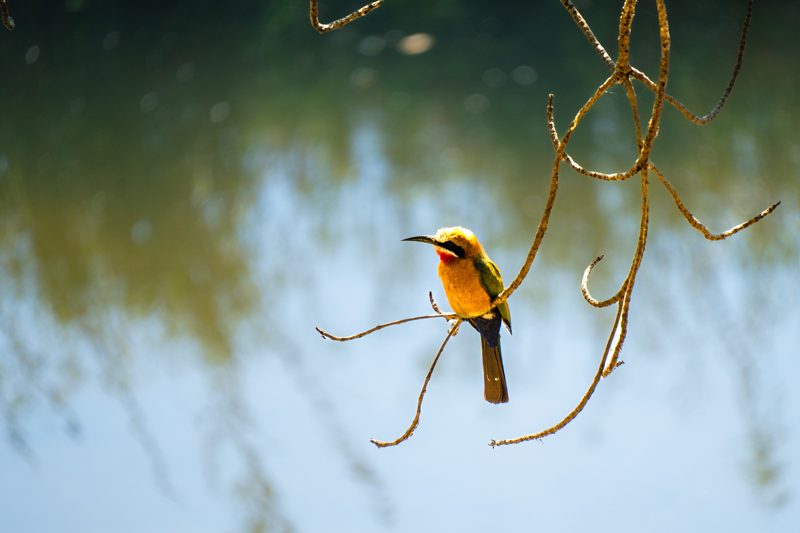
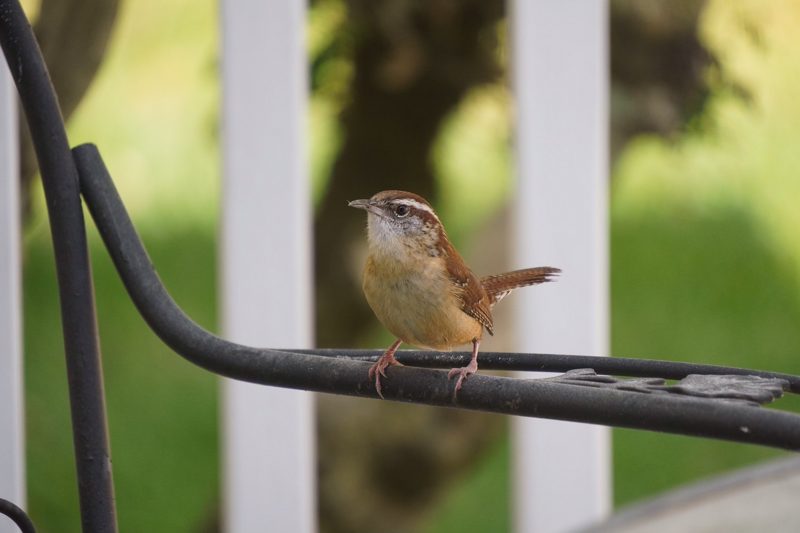
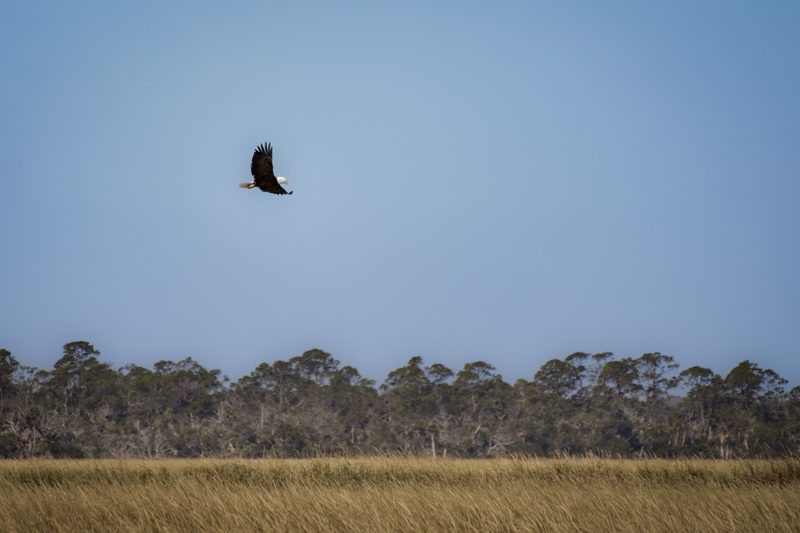
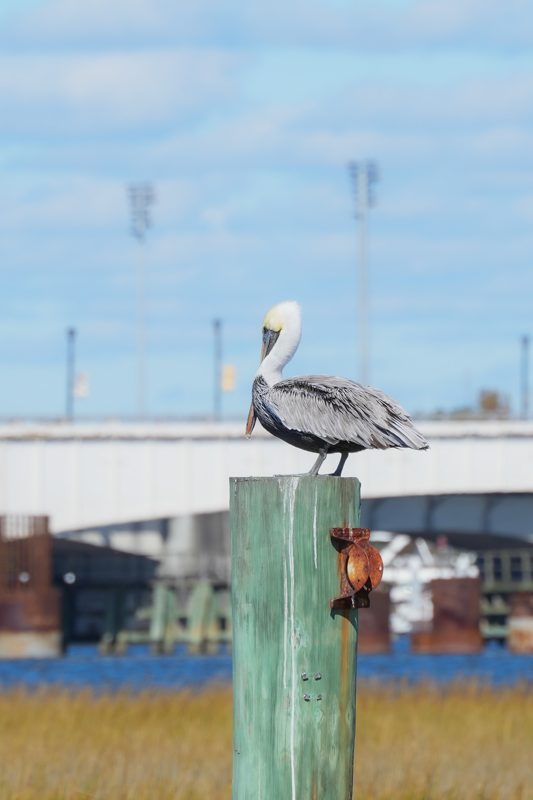
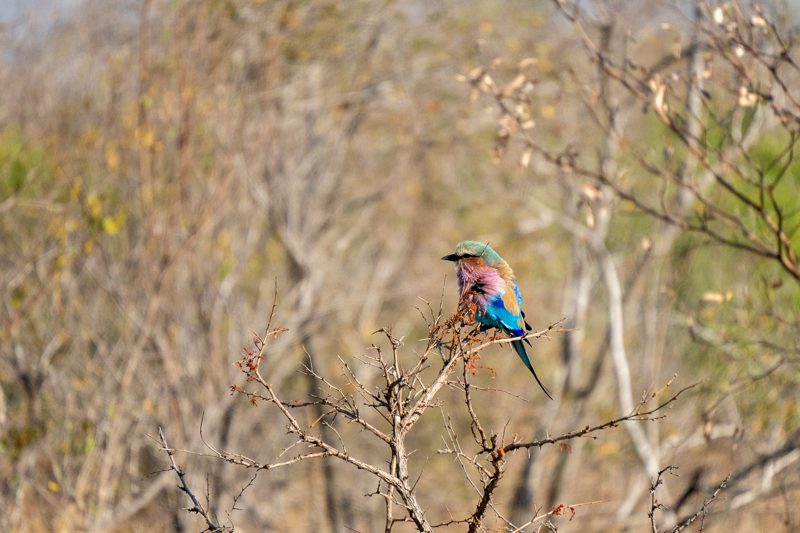
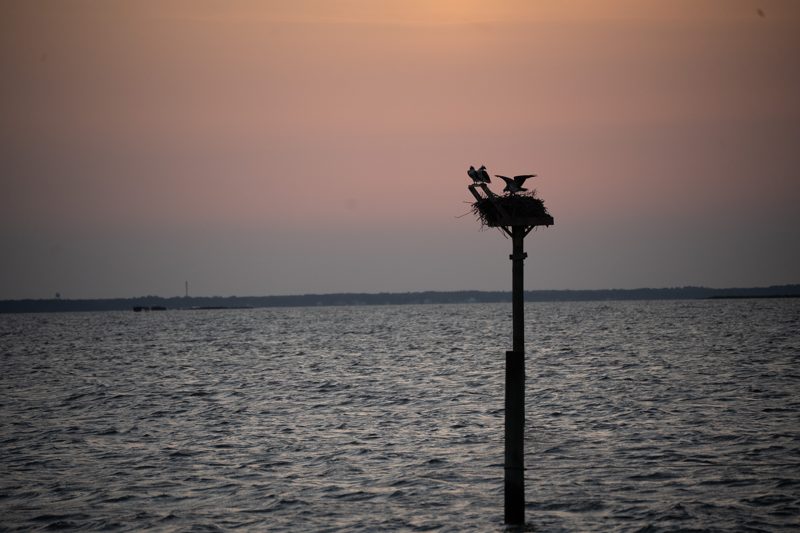
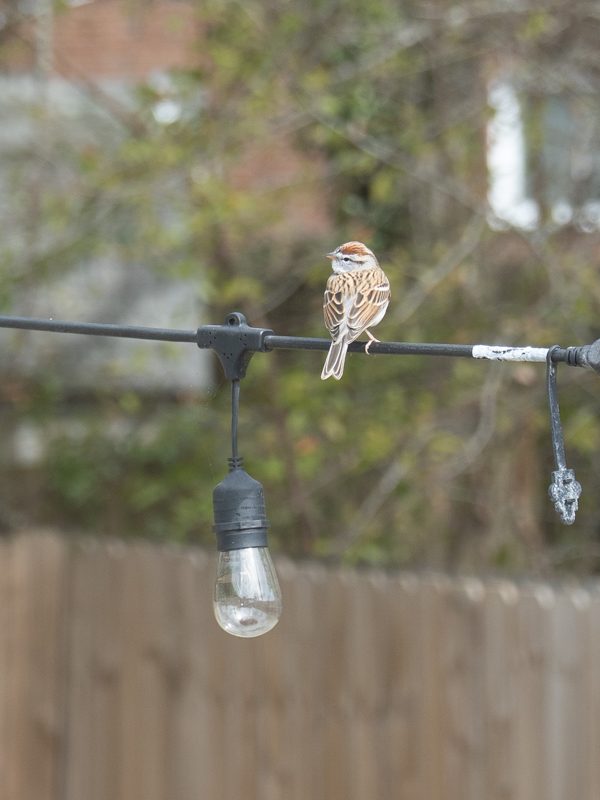
Bird photography is one of the best parts of birding, and you can do it anywhere. The photos on this page came from a backyard, a porch, a city waterfront, a coastal marsh, a dock and a safari in South Africa. You don’t need to travel to get started: the wren and the sparrow were both a few steps from the back door.
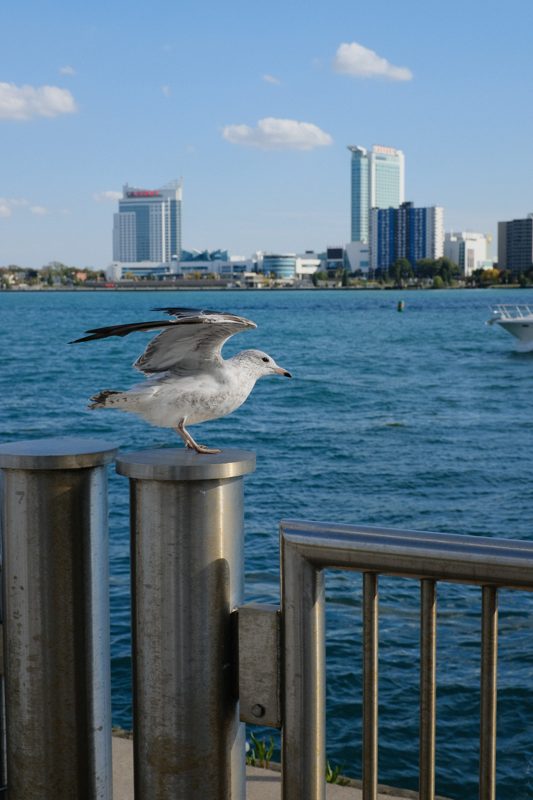
- Start with your phone. Hold it up to one eyepiece of your binoculars (called digiscoping) for record shots that help you identify a bird later.
- A long zoom matters more than an expensive camera. Most of our bird photos were taken with a beginner mirrorless camera and an all-in-one 18-300mm zoom lens, used at the long end. A 70-300mm zoom is the classic next step. See our beginner camera guide for bodies.
- Expect it to be hard. Birds are small, fast and rarely sit still, and many won’t let you get close. Plenty of outings end with blurry shots or nothing at all. Even 300mm often isn’t enough to fill the frame with a small songbird, so you’ll crop a lot. If bird photos become your thing, plan on a longer and more expensive lens, like a 100-400mm or 150-600mm zoom, which can cost more than the camera.
- Use a fast shutter speed: about 1/1000 of a second for perched birds, and faster for birds in flight. Turn on continuous autofocus and your camera’s animal or bird eye detection if it has one.
- Mind the background. The more distance there is between the bird and what’s behind it, the softer and cleaner the background looks.
- Get to eye level where you can, and shoot in soft morning or evening light.
- Keep the bird’s welfare first. If it flushes or stops feeding, you’re too close. A long lens lets you stay back.
If photos become the main event, our photography guide covers the basics.
Birding ethics, laws and safety
Good birders put the birds first. The American Birding Association’s Code of Birding Ethics sums it up.
- Keep your distance. If a bird changes its behavior because of you, you’re too close. Never approach nests.
- Go easy on playback. Playing recorded songs to attract birds stresses them, especially in nesting season, and many parks ban it.
- Leave feathers, nests and eggs where they are. In the US, the Migratory Bird Treaty Act makes it illegal to collect or keep them for nearly all native birds without a permit, even if you find them on the ground.
- Stay on trails and respect private property. Ask before birding on private land.
- Never look at the sun through binoculars, even for a moment. It can permanently damage your eyes. Be careful when scanning for hawks near the sun.
- Ticks and sun: wear long pants in tall grass, use repellent, check for ticks afterward, and wear a hat and sunscreen.
- Keep feeders clean. Wash them every couple of weeks to stop diseases spreading between birds.
For the official rules, see the US Fish and Wildlife Service’s page on the Migratory Bird Treaty Act.
How to start birdwatching: your first week
The goal for week one is to name ten birds near your home.
- Download the apps (day 1): get Merlin Bird ID and download the bird pack for your region. Add eBird if you’d like to keep a list.
- Watch from home (days 1 to 2): spend 15 minutes at a window or in your yard. Note every bird you see, and try to identify each one.
- Practice with binoculars (days 1 to 3): set the eyecups and the diopter for your eyes (the instructions explain how). Then practice raising them to your eyes while keeping them pointed at a still object, like a sign or a branch. Keep your eyes on the bird and bring the binoculars up to them.
- Take a morning walk (days 3 to 5): go to a local park with water and trees just after sunrise. Walk slowly, stop often, and listen. Run Merlin’s Sound ID and look for the birds it suggests.
- Join a group walk (days 5 to 7): look for a free walk with your local Audubon chapter, nature center or bird club. Experienced birders are usually delighted to help beginners.
- Start a list (day 7): write down every species you’ve identified. That’s your first life list.
Your first project: find and identify ten different birds in one week. Most people beat this easily.
Your first three months
- How to practice: go out often, even for 15 minutes, and visit the same spot regularly. You’ll start to notice who’s new.
- By the end of month 1: you know 20 to 30 common local birds by sight, you can find birds in your binoculars quickly, and you recognize a few songs, like the robin and the cardinal.
- By month 3: you’ve been on a few group walks, you’re using eBird to find hotspots, and you’ve seen the first changes of a new season. Your list might be 50 to 100 species, depending on where you live and the time of year.
- The wall most people hit: “little brown birds.” Sparrows, female birds, young birds and fall warblers all look alike at first. Focus on shape, behavior and habitat, and accept that some birds will stay unidentified. Experienced birders let plenty go too.
Common beginner mistakes
- Looking down at the app first. Watch the bird while it’s there. The app will still be there after it flies.
- Buying binoculars that are too powerful. 10x and zoom binoculars are harder to hold steady and to find birds in.
- Walking too fast. Birds reveal themselves when you stop and listen.
- Trying to learn everything at once. Learn your local common birds first.
- Going out at midday in summer. Birds are quiet in the heat. Go early.
- Trusting the app completely. Sound ID and photo ID are very good, but they make mistakes. Confirm with your own eyes.
Birding words you’ll hear
- Life list (lifer): every species you’ve ever seen. A lifer is a bird you’ve seen for the first time.
- Field marks: features that help identify a bird, like wing bars, an eye ring or a tail pattern.
- Hotspot: a public birding location listed on eBird.
- Migration: the seasonal movement of birds between breeding and wintering areas.
- Warbler: a family of small, often colorful songbirds that birders chase in spring.
- Raptor: a bird of prey, like a hawk, eagle, falcon or owl.
- Pishing: a “pssh-pssh” sound some birders make to bring curious birds into view. Use it sparingly.
- Big Day: trying to see as many species as possible in a single day.
The best free resources for learning birdwatching
- Apps: Merlin Bird ID for identification by sound and photo, and eBird for lists and local sightings. The Audubon Bird Guide app is another free field guide.
- Bird profiles: the Cornell Lab’s All About Birds site has free profiles, photos, songs and range maps for hundreds of species.
- Group walks: find a local chapter through Audubon near you. Many chapters run free walks for beginners.
- Community science: join the Christmas Bird Count in winter or the Great Backyard Bird Count in February. Both welcome beginners.
- Community: r/birding for ID help and sightings.
More ways to get outside
Birding fits into almost any walk, so it pairs well with hiking and camping. Many birders take up photography or plant a wildlife-friendly yard with our gardening guide. Like looking up at night too? Try stargazing. For more ideas, browse our outdoor hobbies, cheap hobbies and hobbies for retirees lists, or try the Hobby Finder.
Where to go next
Ready to go deeper?
We get you started. These are the specialist sites and communities we'd send a friend to next.
- Merlin Bird ID ↗the Cornell Lab's free app that identifies birds by sound, photo or a few simple questions
- eBird ↗a free Cornell Lab tool to log your sightings, keep your life list and see what's been spotted near you
- Audubon ↗the National Audubon Society, with local chapters that run free beginner bird walks across the US
If you like birdwatching, try...



More on birdwatching
Birdwatching FAQ
How do I start birdwatching as a beginner?
Download the free Merlin Bird ID app, get a pair of 8x42 binoculars, and start with birds in your yard or a local park. Go out early, move slowly, and join a free local bird walk. Learn a handful of common birds well before chasing rare ones.
What do I need to start birdwatching?
A pair of binoculars and a way to identify birds, such as the Merlin app or a regional field guide. Comfortable shoes, a notebook or the eBird app, and a hat cover the rest.
What are the best binoculars for beginner birdwatchers?
An 8x42 roof-prism pair that's waterproof and focuses close. Good beginner options include the Nikon Prostaff P3 and the Vortex Diamondback HD. Our binocular guide compares more picks.
Is it bird watching or birding?
Both are right. Birding is the more common term among enthusiasts, and birdwatching or bird watching is what most people search for. They mean the same hobby.
What is the best time of day for birdwatching?
Early morning, from sunrise to about 10 a.m., when birds are most active and singing. Late afternoon can be good too. In winter, birds are active later into the morning.
Can I keep a feather I find?
In the US, usually not. The Migratory Bird Treaty Act makes it illegal to keep feathers, nests or eggs of most native birds without a permit. Enjoy it, photograph it and leave it. This isn't legal advice.
How do I attract birds to my yard?
Put up a feeder with black-oil sunflower seed, add a shallow birdbath, and plant native shrubs and flowers. Keep feeders clean and place them within about 3 feet of a window or more than 30 feet away to reduce window strikes.
What camera do I need for bird photography?
Start with your phone held up to your binoculars. For a real camera, the zoom matters more than the body: a beginner mirrorless camera with an all-in-one 18-300mm lens or a 70-300mm zoom will photograph most birds. Use a fast shutter speed, around 1/1000 of a second, and continuous autofocus. Be warned that small or distant birds often need a longer, more expensive lens, such as a 100-400mm or 150-600mm zoom.
How much does birdwatching cost?
It can be free with borrowed binoculars and free apps. A good beginner pair of binoculars costs roughly 100 to 250 USD, and a field guide is about 15 to 30 USD.